
FREE 6-HOUR LIVE RISK ASSESSMENT MASTERCLASS FOR LICENSED MENTAL HEALTH PROFESSIONALS
TUESDAY, NOVEMBER 24, 2026 | 10:00 AM TO 5:30 PM ET
Suspect A Client's Life Is At Risk? Act Quickly With A 5-Part Formulation To Build A Custom Treatment Plan, Refer To Another Provider, Or Escalate Care
In this free 6-hour Masterclass, you'll discover how to use a 5-part formulation to determine how much your client's life is in danger, know when to keep treating, when to refer, & when a client in crisis needs intensive outpatient care or a hospital stay, & develop a safety plan with them so they know what to do, who to reach, & how to make their home safer if the urges return
With James H. Andrews, PhD, LCSW, LICSW, BCD, a forensic social worker who spent eleven years managing quality assurance and risk management for a community mental health provider.
6 CEs and lifetime recording access available for purchase after free registration.

Register Free Below. This Event Is For Licensed Mental Health Professionals
By providing your phone number, you consent to receive SMS messages about joining the webinar. You may reply STOP at any time to unsubscribe.

The Masterclass Starts In
SCREEN FOR FIVE HIDDEN DEFICIENCIES
Omega-3, Vitamin D, B12, Magnesium & Iron in One Training
9 Board-Approved CEs
Available for Purchase in Next Step
RECORDING WITH CE PURCHASE
Watch on Your Own Schedule




When Youth Therapy Gets Stuck: Trauma, Anxiety, and Emotional Dysregulation in Children
What You'll Discover In The Risk Assessment Masterclass
Use James H. Andrews's 5-part formulation to see how much a client's life is in danger, then act on it: add interventions in session, refer to another provider, or escalate to intensive outpatient care or hospitalization, & build a safety plan with the client for the moment the urges return
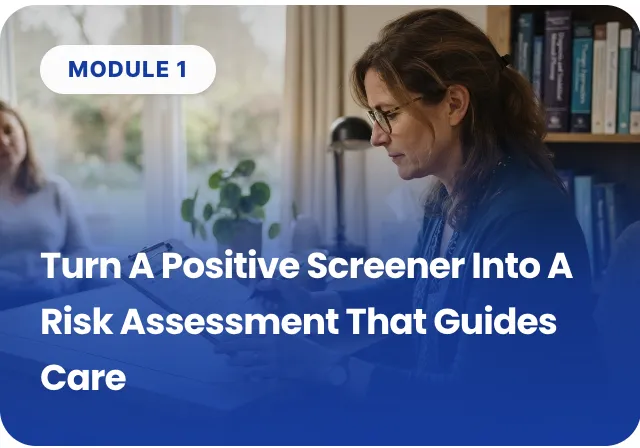
A positive screener tells you a client's safety is in question, and it leaves the next question open: how serious is it, and what should happen now?
James H. Andrews covers where screening ends and a full risk assessment begins, and what structured tools can and can't tell you; in his training, a screening result informs the decision and never makes it.
You'll be able to use a screening result as the starting point of your assessment, so each client's care is based on the full picture of their risk.
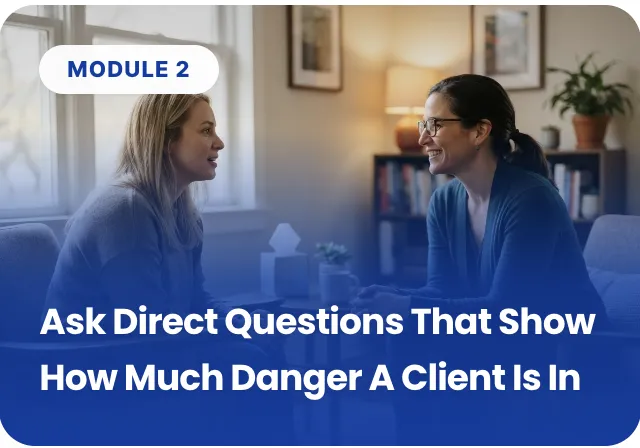
A client who's afraid of what happens if they tell you the truth may hold back the honest answer you need to help them out of danger.
James H. Andrews walks through direct, person-centered, and culturally responsive questions about thoughts of ending their life, intent, planning, past behavior, access to lethal means, and how a client manages urges.
You'll be able to ask about all six areas with questions that make an honest answer easier to give, so a client can tell you what they're really thinking, including any plan they've made and any steps they've already taken.

In James H. Andrews's view, risk can change from one session to the next, and a client who seemed settled at the last session may be facing something new.
He shows how to identify and put together five parts: acute warning signs, longer-term vulnerabilities, protective factors, available supports, and foreseeable changes in risk.
You'll be able to turn what a client tells you into one concise formulation, so what you do next, from added interventions to a higher level of care, fits how serious their risk is and what's protecting them right now.
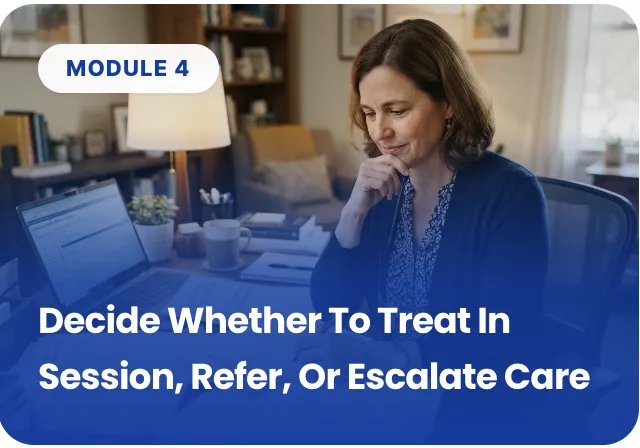
When a client's life may be at risk, the choice can look like home or the hospital, with nothing in between.
James H. Andrews applies a structured assessment-to-action framework across the full range: continuing treatment with you and adding interventions, a referral to another provider, or a higher level of care, from intensive outpatient services to hospitalization.
You'll be able to choose the least restrictive care that's still safe, so a client gets the care their risk calls for while keeping as much of their work, home, and therapy with you as safety allows.
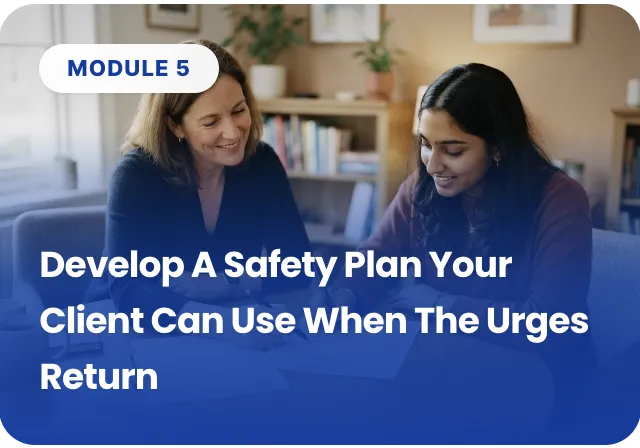
A safety plan is built in your office and used outside it, at the moment a client needs it most and you aren't there.
James H. Andrews covers how to develop and document a collaborative plan that addresses safety planning, reduced access to lethal means, consultation, continuity of care, and follow-up responsibilities, including the weeks after a hospital or emergency stay.
You'll be able to build the plan with your client, step by step, so they can leave knowing what to do, who to reach, and how to make their home safer if the urges return.

When a client's life may be at risk, what you can share with family or another provider depends on federal privacy rules and the laws where you practice, and the note you write may later be read by someone who wasn't there.
James H. Andrews covers informed consent, the limits of confidentiality, the duty to protect, consultation, and documenting your assessment findings, clinical decisions, interventions, and follow-up plans.
You'll be able to apply the standards that govern your practice and write a note that shows what you found, what you decided, and why, so a client's privacy is kept where it can be, the right people are brought in when their safety calls for it, and anyone who picks up their care can see why you acted.
Step 1 / 2
Register For This Free 6-Hour Clinical Summit On June 2nd
Somatic Interventions Clinical Summit: Body-Based Healing for Trauma Clients When Talk Therapy Has Failed
The Masterclass Starts In
When Youth Therapy Gets Stuck: Trauma, Anxiety, and Emotional Dysregulation in Children
What You'll Discover In The Risk Assessment Masterclass
Use James H. Andrews's 5-part formulation to see how much a client's life is in danger, then act on it: add interventions in session, refer to another provider, or escalate to intensive outpatient care or hospitalization, & build a safety plan with the client for the moment the urges return
A positive screener tells you a client's safety is in question, and it leaves the next question open: how serious is it, and what should happen now?
James H. Andrews covers where screening ends and a full risk assessment begins, and what structured tools can and can't tell you; in his training, a screening result informs the decision and never makes it.
You'll be able to use a screening result as the starting point of your assessment, so each client's care is based on the full picture of their risk.
A client who's afraid of what happens if they tell you the truth may hold back the honest answer you need to help them out of danger.
James H. Andrews walks through direct, person-centered, and culturally responsive questions about thoughts of ending their life, intent, planning, past behavior, access to lethal means, and how a client manages urges.
You'll be able to ask about all six areas with questions that make an honest answer easier to give, so a client can tell you what they're really thinking, including any plan they've made and any steps they've already taken.
In James H. Andrews's view, risk can change from one session to the next, and a client who seemed settled at the last session may be facing something new.
He shows how to identify and put together five parts: acute warning signs, longer-term vulnerabilities, protective factors, available supports, and foreseeable changes in risk.
You'll be able to turn what a client tells you into one concise formulation, so what you do next, from added interventions to a higher level of care, fits how serious their risk is and what's protecting them right now.
When a client's life may be at risk, the choice can look like home or the hospital, with nothing in between.
James H. Andrews applies a structured assessment-to-action framework across the full range: continuing treatment with you and adding interventions, a referral to another provider, or a higher level of care, from intensive outpatient services to hospitalization.
You'll be able to choose the least restrictive care that's still safe, so a client gets the care their risk calls for while keeping as much of their work, home, and therapy with you as safety allows.
A safety plan is built in your office and used outside it, at the moment a client needs it most and you aren't there.
James H. Andrews covers how to develop and document a collaborative plan that addresses safety planning, reduced access to lethal means, consultation, continuity of care, and follow-up responsibilities, including the weeks after a hospital or emergency stay.
You'll be able to build the plan with your client, step by step, so they can leave knowing what to do, who to reach, and how to make their home safer if the urges return.
When a client's life may be at risk, what you can share with family or another provider depends on federal privacy rules and the laws where you practice, and the note you write may later be read by someone who wasn't there.
James H. Andrews covers informed consent, the limits of confidentiality, the duty to protect, consultation, and documenting your assessment findings, clinical decisions, interventions, and follow-up plans.
You'll be able to apply the standards that govern your practice and write a note that shows what you found, what you decided, and why, so a client's privacy is kept where it can be, the right people are brought in when their safety calls for it, and anyone who picks up their care can see why you acted.
Step 1 / 2
Register For This Free 6-Hour Clinical Summit On June 2nd
Somatic Interventions Clinical Summit: Body-Based Healing for Trauma Clients When Talk Therapy Has Failed
The Masterclass Starts In
Meet Your Presenter
James H. Andrews, PhD, LCSW, LICSW, BCD, Spent Eleven Years Managing Quality Assurance & Risk Management For A Community Mental Health Provider
James H. Andrews is a licensed clinical social worker in Pennsylvania and Massachusetts, a Board Certified Diplomate in clinical social work, and a forensic social worker. His clinical work spans seven years as a senior milieu therapist at a psychiatric hospital, community counseling, clinical and county director roles, and his own forensic practice, which he has run since 1995.
He has taught graduate social work courses since 2005 and has given more than 120 presentations for clinicians, including trainings on clinical documentation and on the decisions where clinical care, risk management, and ethics meet. Throughout the Masterclass, he works through realistic case scenarios with clients of different ages, gender identities, sexual orientations, racial and ethnic backgrounds, faith traditions, and financial circumstances, so the next time you suspect a client's life is at risk, you know what to ask, what to do, and what has to be in place before they leave your office.




The Masterclass Starts In
The Difference After One Day
WITH THIS MASTERCLASS:
Know how much danger a client is in, from a 5-part formulation
Keep treating, refer, or escalate care, matched to the risk
Build a safety plan each client can use when the urges return
Document what you found, what you decided & why
WITHOUT IT:
A screener score that can't show how much danger a client is in
A choice that comes down to home or the hospital
Urges that can return between sessions, when you aren't there
A decision that's hard to explain to someone who wasn't there
The Masterclass Starts In
After you register, you'll have the option to add 6 CEs and lifetime access to the recording.
Frequently Asked Questions
What exactly is this, and what do I get?
A free, live 6-hour Masterclass on Zoom with James H. Andrews on what to do when you suspect a client's life is at risk: how to determine how serious the risk is, choose whether to treat, refer, or escalate care, and develop a safety plan with the client. After you register, you can add 6 CEs and lifetime access to the recording.
It's a full Tuesday. Is it worth clearing my schedule?
Yes, if you see clients whose life can come to be at risk. You'll leave with the direct questions, the 5-part formulation, the full range of options from a custom treatment plan to a higher level of care, and a way to build a safety plan with each client.
Is it really free?
Yes. Registration is free, and so is attending live.
Is it live or recorded?
Live on Zoom, Tuesday, November 24, 2026, from 10:00 AM to 5:30 PM ET, with breaks.
What is the 5-part formulation?
It's one read on a client's risk built from five parts: what's new or worse right now, what's always been there, what's holding them here, who they can reach, and what's coming that could change the risk. In James H. Andrews's terms, that's acute warning signs, longer-term vulnerabilities, protective factors, available supports, and foreseeable changes in risk.
Is this only about hospitalization decisions?
No. It covers the full range of options: continuing treatment with added interventions, making a referral, and moving to a higher level of care, from intensive outpatient services to hospitalization.
What does "least restrictive" mean here?
The care that's safe for this client and limits their freedom and daily life no more than safety requires. Safety comes first; "least restrictive" chooses among the options that are safe.
I already completed a required training on this. Is this the same?
No. This Masterclass centers on what comes after the assessment: choosing whether to treat, refer, or escalate care, building the safety plan with the client, and documenting why.
Is it too basic for an experienced clinician?
No. It's intermediate level. It builds on the assessment and crisis-response skills you already have and applies them to realistic cases.
Does it cover the laws in my state?
It covers the legal and ethical standards that apply when responding to risk, including informed consent, the limits of confidentiality, and the duty to protect, and where those rules vary by state. It isn't legal advice for any state.
How many CEs can I earn, and how?
6 CEs, including 1 CE designated as Ethics, available with the Premium Pass after you register. Full attendance is required to earn CEs.
Can I get the recording?
Yes. Lifetime access to the recording is available for purchase after you register.
Are the CEs approved for my license?
To check approval for your license type & state, scroll to the bottom of this page & click the Board Approvals button.
The Masterclass Starts In
Scope and Limitations Disclosure:
This Masterclass is educational and is intended for licensed mental health professionals practicing within their scope of practice and jurisdiction. It supports risk assessment, clinical formulation, decisions about treatment, referral, and level of care, collaborative safety planning, and documentation when a client's safety is in question. It does not provide legal advice for any state, it does not train participants to provide emergency or crisis services, and it does not qualify participants to work outside their scope of practice. All clinical decisions remain the responsibility of the licensed clinician.
Commercial Support Disclosure
James H. Andrews, PhD, LCSW, LICSW, BCD, is an independent clinician & continuing education presenter whose work focuses on clinical ethics, risk assessment, clinical documentation, and forensic social work. This training does not require participants to purchase any additional products, books, or materials to complete the training.