
FREE 6-HOUR LIVE HIGH-STAKES NOTES MASTERCLASS FOR LICENSED THERAPISTS
THURSDAY, NOVEMBER 19, 2026 | 10:00 AM TO 5:30 PM ET
Small Mistakes In Your Notes Can Mean Lost Payments, Board Complaints, & Interrupted Care: Here's How To Keep Records That Protect You & Your Clients Years Down The Line
In this free 6-hour Masterclass, Dr. Patterson shows you exactly how to write notes that include every element an auditor looks for so you can avoid clawbacks, show where a client is in treatment as they improve so they can keep getting the care they need, & record your reasoning without oversharing, so you're ready if a complaint is ever filed & your client's private life can stay private
With Frances Patterson, MS, PhD, LADAC II, MAC, DAC, QCS, a Qualified Clinical Supervisor who has worked as a counselor and program administrator in treatment programs in Virginia and Tennessee
6 CEs and lifetime recording access available for purchase after free registration.


Register Free Below. This Event Is For Licensed Mental Health Professionals
By providing your phone number, you consent to receive SMS messages about joining the webinar. You may reply STOP at any time to unsubscribe.

The Webinar Goes Live In
SCREEN FOR FIVE HIDDEN DEFICIENCIES
Omega-3, Vitamin D, B12, Magnesium & Iron in One Training
9 Board-Approved CEs
Available for Purchase in Next Step
RECORDING WITH CE PURCHASE
Watch on Your Own Schedule
eCare Behavioral Health Institute is a continuing education provider for licensed mental health professionals, offering live and recorded trainings across the clinical work they do every day.




When Youth Therapy Gets Stuck: Trauma, Anxiety, and Emotional Dysregulation in Children
What You'll Discover In The High-Stakes Notes Masterclass
Every note has two jobs, to keep a client's care going even if someone else takes over & to show you did the work right if anyone checks later: Dr. Patterson shows what each kind of note needs to do both, from the first assessment to discharge, so your clients' care can continue & you can stop wondering what a reviewer will find

Keep Small Mistakes Out With The Core Elements Every Note Needs
If a note is missing an element an insurer checks, like start and stop times, a link to the treatment plan, or a signature, that session can be counted as paid in error, and a fix added later is dated and marked as a later entry.
Dr. Patterson covers the core elements of effective behavioral health documentation and what each one does for a client's care, built around her own question: "what is enough, what is too much?"
You'll be able to build every core element into each note the first time, so the record shows where the client is in the treatment plan and you can avoid losing payment for sessions you provided.
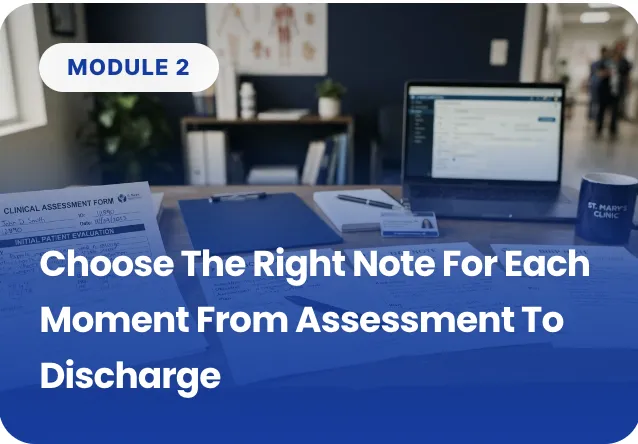
Choose The Right Note For Each Moment From Assessment To Discharge
An assessment summary, a progress note, a clinical review, and a discharge summary each do a different job, and a template built for one can leave out what another needs.
Dr. Patterson differentiates the common forms of clinical and progress notes used in behavioral health settings, and what each one is for.
You'll be able to choose the right note for each moment and fill it with what that note is for, so if a client moves to another clinician or level of care, the next clinician can see what's been done and what comes next.
Show Why A Client Still Needs Care, Even When They're Improving
A note that shows a client improving can read to a payer as a client who no longer needs this level of care, and the sessions they're counting on can be denied.
Dr. Patterson explains how effective documentation supports medical necessity, justification of continued treatment, and continuity of care, from the assessment summary through each progress note.
You'll be able to document a client's progress and why treatment still needs to continue, so they can stay in care for as long as they need it.
Document High-Risk Sessions So The Record Shows Your Reasoning
If a note from a high-risk session records what you decided but not what you assessed or why, it may not show you made a sound call if your care is ever questioned in a board complaint.
Dr. Patterson identifies the documentation considerations for specialized and high-risk clinical situations, with case examples from different settings.
You'll be able to document what you saw, what you decided, and why, alongside your setting's own safety procedures, so if your care is ever questioned, the record can show the clinical judgment behind what you did.
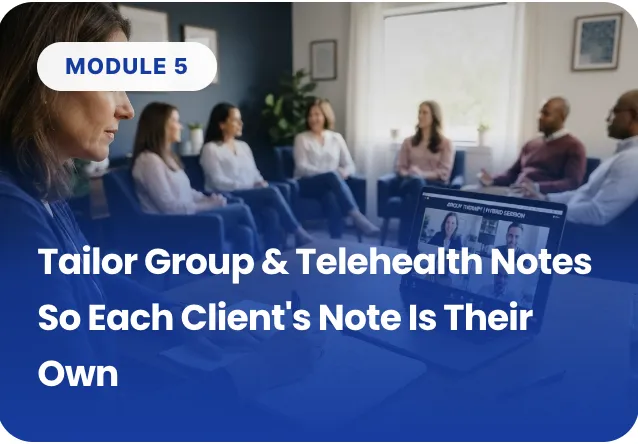
Tailor Group & Telehealth Notes So Each Client's Note Is Their Own
A group note written as a summary of the whole group can carry other members' information into one client's record, and a note for a video session that doesn't show how and where the session happened can cost you the payment for it.
Dr. Patterson shows how to develop progress notes for specific settings and modalities, including group and telehealth sessions.
You'll be able to write a note that fits how and where the session happened, so each client's record holds their own care and nobody else's.
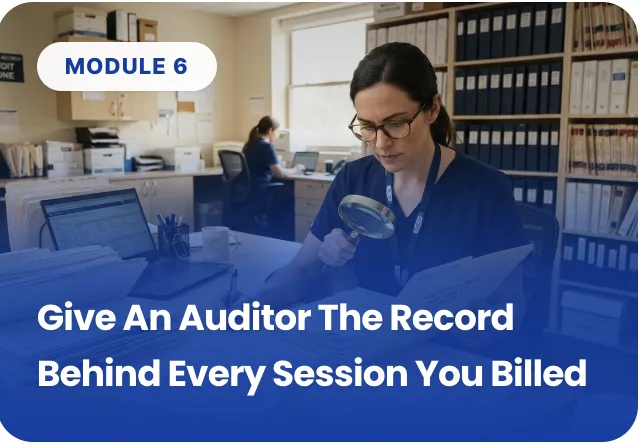
Give An Auditor The Record Behind Every Session You Billed
If your notes are audited and a required detail is missing from one note, or from many, an insurer can take back payments for sessions you were paid for years ago.
Dr. Patterson explains how client records may be used in audits and identifies the documentation practices that support compliance.
You'll be able to keep your records ready for review as you write them, so your notes can show an auditor exactly what you provided and you can avoid a clawback.
Protect A Client's Privacy If An Attorney Subpoenas Their Records
In a custody or divorce case, an attorney can subpoena a client's records, and private details in a note can be used against your client in court.
Dr. Patterson walks through litigation and subpoenas: how a client's records may be requested and used once a case begins.
You'll be able to keep each note to what care requires and respond to a subpoena knowing what it asks of you, so your client's private life can stay as private as the law allows.
Step 1 / 2
Register For This Free 6-Hour Clinical Summit On June 2nd
Somatic Interventions Clinical Summit: Body-Based Healing for Trauma Clients When Talk Therapy Has Failed
The Masterclass Goes Live In
Meet Your Presenter
Frances Patterson, MS, PhD, LADAC II, MAC, DAC, QCS, Has Run Treatment Programs In Two States & Supervises Counselors Working Toward Licensure
Dr. Patterson earned her bachelor's and master's degrees at Virginia Commonwealth University and holds a PhD. She has worked as a counselor and as a program administrator in treatment programs in Virginia and Tennessee, and today she is a Qualified Clinical Supervisor in Tennessee who supervises counselors working toward licensure.
That puts her on both sides of a note: writing her own, and being responsible for the records of a whole program and of the counselors she supervises. She trains clinicians locally, statewide, and nationally, and she has taught clinical documentation for eCare. Throughout the Masterclass, she'll walk you through case examples from different settings, one kind of note at a time, and show you what each one needs, how to describe a client with respect, and how to write every note so it protects you and your clients.




The Webinar Goes Live In
The Difference After One Day
With This Masterclass:
Avoid clawbacks with notes that include what an auditor checks
Show your reasoning in the record if a complaint is ever filed
Help clients keep the care they need, whoever treats them next
Protect a client's privacy if their records are subpoenaed
Without It:
Risk clawbacks from notes missing what an auditor checks
Face a complaint with records that show only your conclusion
See a client lose care the chart didn't justify
Watch a client's private life end up in court
The Webinar Goes Live In
The live Masterclass is free when you register. 6 CEs and lifetime recording access are available as an upgrade after you sign up.
Frequently Asked Questions
What exactly is this, and what do I get?
A free 6-hour live Masterclass with Dr. Frances Patterson on keeping small mistakes out of every kind of note, from the assessment summary to the discharge summary, including group, telehealth, and high-risk sessions. 6 CEs and lifetime recording access are available as an upgrade after you register.
I see clients on Thursdays. Is it still worth registering?
Yes. The Masterclass runs Thursday, November 19, from 10:00 AM to 5:30 PM ET, so you can join for the hours you're free.
What kinds of small mistakes are we talking about?
The details a reviewer checks that are easy to miss as you write: a missing start time, a session that doesn't tie back to the treatment plan, a line copied from a past note, a progress note that makes a client look like they no longer need care, and more detail than care requires. Dr. Patterson covers the core elements of a note, the different forms of notes, medical necessity, and how records are used in audits, litigation, and subpoenas.
Is this really free?
Yes. Registration and the full live Masterclass are free.
Is this live, or a recording?
Live. Dr. Patterson teaches in real time, with case examples throughout.
Is this the same as Dr. Patterson's Clinical Documentation & Treatment Planning course?
No. That course centered on treatment planning. This Masterclass centers on the small mistakes that can come back later in every kind of note, including group and telehealth sessions, high-risk situations, and records in audits, litigation, and subpoenas.
I don't take insurance. Is this for me?
Yes. Records can be requested by subpoena, used in litigation, or read in a complaint whether or not you take insurance, and the Masterclass covers what each note needs either way.
My agency gives me a template. Does this still apply?
Yes. A template sets the format; what goes into each note is still yours to write, and that's what the Masterclass covers.
Is this too basic for me?
It's taught at the intermediate level, for licensed clinicians who write notes every week and want to know what an insurer or auditor will check before anyone does.
Is this for my license type?
Yes, if you're a licensed mental health professional: LCSWs, LPCs, LMFTs, psychologists, licensed counselors, and other licensed clinicians.
How many CEs are available, and how do I get them?
6 CEs are available as an upgrade after you register, earned by attending live, watching the recording, or both.
Can I get the recording?
Yes. Lifetime recording access is available as an upgrade after you register.
Are the CEs approved for my license?
To check approval for your license type & state, scroll to the bottom of this page & click the Board Approvals button.
The Webinar Goes Live In
Scope and Limitations Disclosure:
This Masterclass is educational and is intended for licensed mental health professionals practicing within their scope of practice and jurisdiction. It supports clinical documentation from assessment through discharge, including progress notes for group and telehealth sessions and records requested in audits, litigation, and subpoenas. It does not provide legal advice, it does not train participants in risk or safety assessment or crisis intervention, and it does not qualify participants to work outside their scope of practice. All clinical decisions remain the responsibility of the licensed clinician.
Commercial Support Disclosure
Frances Patterson, MS, PhD, LADAC II, MAC, DAC, QCS, is an independent clinician & continuing education presenter whose work focuses on clinical supervision, professional training, and behavioral health documentation. This training does not require participants to purchase any additional products, books, or materials to complete the training.