
FREE 6-HOUR LIVE EXPOSURE WITH RESPONSE PREVENTION (ERP) FOR OBSESSIVE-COMPULSIVE DISORDER (OCD) WEBINAR FOR THERAPISTS
TUESDAY, DECEMBER 15, 2026 @ 10:00 AM TO 5:30 PM ET
Why Won't Your Clients With OCD Start Or Stick With ERP? A Nationally Known Psychologist & Author Of 4 Books On Anxiety & OCD Reveals The 2 Missing Pieces That Help OCD Clients Finally Follow Through With ERP
In this free 6-hour Webinar, you'll discover how to teach a scared client what their amygdala is doing, so they can say yes to the first exposure, work with the thoughts that stop them before an exposure starts, pick the goal OCD is blocking to help them follow through with treatment, & plan every exposure around the compulsion they'll skip, so they can get their life back from OCD
With Catherine M. Pittman, Ph.D., Health Service Provider in Psychology (HSPP), licensed clinical psychologist, Professor of Psychology at Saint Mary's College, and co-author of Rewire Your OCD Brain, who trains clinicians across the country on anxiety and OCD
After registration, you'll have the option to get the "Premium Pass," which gives you lifetime access to the recording to turn this training into a clinical reference you can use for the rest of your career, plus 6 continuing education (CE) credits.

Register Free Below. This Event Is For Licensed Mental Health Professionals
By providing your phone number, you consent to receive SMS messages about joining the webinar. You may reply STOP at any time to unsubscribe.

The Webinar Starts In
SCREEN FOR FIVE HIDDEN DEFICIENCIES
Omega-3, Vitamin D, B12, Magnesium & Iron in One Training
9 Board-Approved CEs
Available for Purchase in Next Step
RECORDING WITH CE PURCHASE
Watch on Your Own Schedule
What Therapists Say About eCare's Live Trainings
"I was very surprised and delighted by this presentation. My expectations were low, to be honest, but I was blown away by the knowledge, examples, and tangible tips (exercises, books, resources) provided in this training. Honestly, the BEST TRAINING I've attended in YEARS!!!!"
- eCare attendee

"This is the first webinar in FOREVER that kept me fully engaged for more than 20 minutes! Almost always I'm drifting toward other windows & presentations become a background podcast. Not this one..."
- eCare attendee
"Totally excellent presentation! I've been in practice for over 30 years, so seldom do seminars give me such clear, fresh, helpful information from an interesting and engaging presenter. This was great, and I'll look for other webinars given by this presenter. Thank you!!"
- eCare attendee
"Loved this training. It was well organized & easy to follow & understand. It felt like something I could apply in practice. Often in other presentations I think that was a great abstract concept, now how do I apply it, but that was not an issue here. I loved that there were many examples of techniques and how to implement them."
- eCare attendee
"I loved and appreciated the interactive format. It kept me engaged. Having the presenter keep pace with the comments, reflect on them, and being able to read other attendees' comments made this feel much more LIVE and in person. I really appreciated that much more than presentations that go on for a while and then answer questions out of context."- eCare attendee
"The presenters you choose seem to really know the material and they live it, they just don't pontificate, they believe in what they are sharing. This is what holds my attention. I get bored with a canned lecture, your instructors keep me focused and excited about putting to use what I've learned."- eCare attendee
eCare Behavioral Health Institute provides continuing education for licensed mental health professionals, including LCSWs, LPCs, LMFTs and psychologists.




When Youth Therapy Gets Stuck: Trauma, Anxiety, and Emotional Dysregulation in Children
What You'll Discover In The ERP for OCD Webinar
Explaining ERP & its evidence doesn't always get a client with OCD to start it or stay with it. Catherine M. Pittman, Ph.D., HSPP, teaches the 2 missing pieces she adds to ERP, so a client who's been putting off the first exposure, or stopping after a few, can decide on their own to keep doing the exposures until the compulsions start to ease
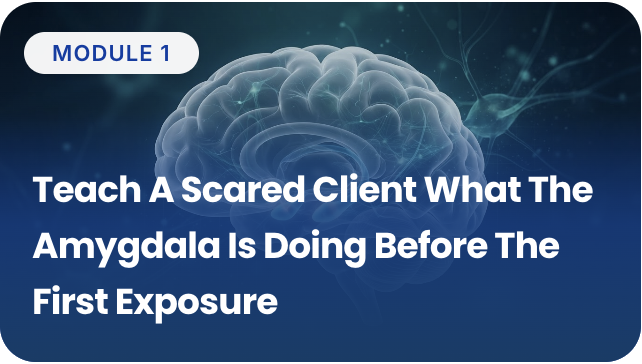
If a client takes a racing heart near a trigger as a sign of danger, the first exposure can look reckless to them, and they can turn ERP down once it's explained.
Catherine explains the functioning of the amygdala in physical symptoms and avoidance: how to describe the body's fear response to a client, and why staying away from triggers can keep the fear going.
You'll be able to teach a client what their racing heart and their urge to avoid are telling them before the first exposure, so a client who hesitated can approach the first trigger on their plan knowing what their body is doing.
A client can know an obsession makes no sense and still not be able to stop the compulsion, and without a picture of what keeps the cycle going, they can take that as a personal weakness and pull back from treatment.
Catherine describes the role of the amygdala in maintaining obsessions and compulsions, for the purposes of client education, and how she puts that cycle into words a client can use.
You'll be able to show a client what keeps the cycle going, so they can decide for themselves to skip the compulsion when the urge comes.
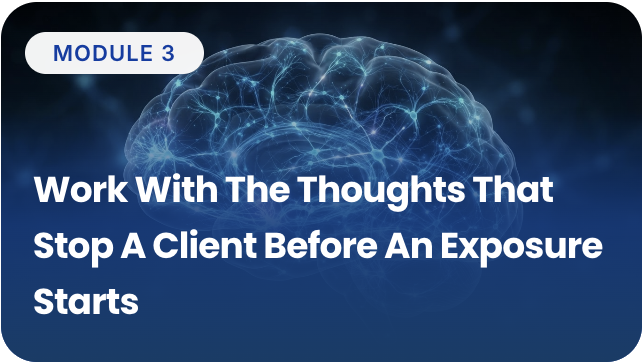
If a thought about what an obsession means stops a client before an exposure starts, the session can turn into a debate about the thought, and the exposure may never start.
Catherine describes the role of the cortex in influencing amygdala activation, and how she uses it to modify what her objectives call self-defeating thinking patterns, alongside exposure.
You'll be able to work with the thoughts that set off the amygdala, alongside exposure, so a client can start the exposure they agreed to while the thought is still there.
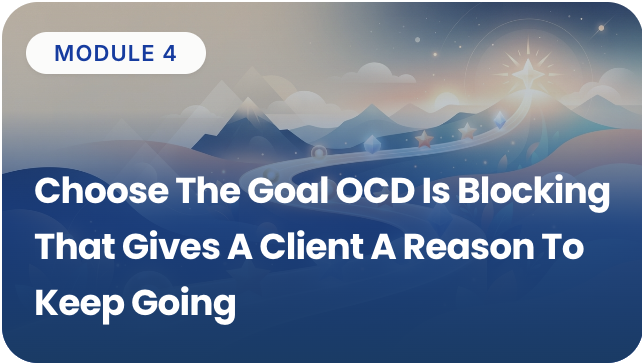
When the only goal on a plan is for the obsessions or the anxiety to stop, every obsession that shows up can look to the client like proof that ERP isn't working, and the exposures can stop after the first few.
Catherine covers how she selects the goals to work on first from the client goals blocked by OCD (the course's phrase for the parts of life OCD keeps a client from), and how to build the ERP plan toward the one you choose together.
You'll be able to choose with the client a goal that gives them a reason of their own to do exposures, so the next exposure is a step toward the job, the relationship, or the family life they want back.
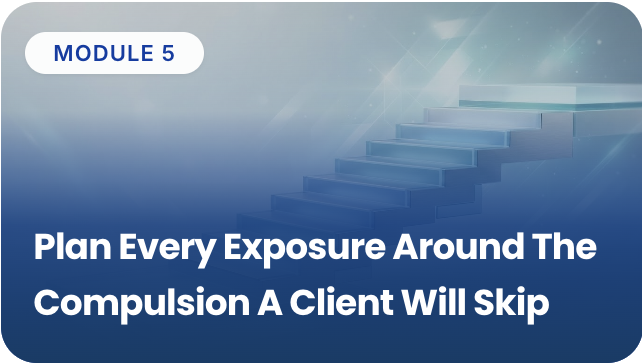
If an exposure plan names the trigger but not the compulsion the client will skip, a client can finish the exposure, do the ritual afterward, and leave the fear untested.
Catherine walks through how she uses Exposure with Response Prevention to help the amygdala develop new responses to triggers (her framing of what ERP does), from the exposure itself to the response prevention that goes with it, with the explanation and the goal already in place.
You'll be able to plan each exposure with the response prevention named, so a client can sit with a trigger they've been avoiding and skip the compulsion that usually follows it.
Step 1 / 2
Register For This Free 6-Hour Clinical Summit On June 2nd
Somatic Interventions Clinical Summit: Body-Based Healing for Trauma Clients When Talk Therapy Has Failed
The Webinar Starts In
When Youth Therapy Gets Stuck: Trauma, Anxiety, and Emotional Dysregulation in Children
What You'll Discover In The ERP for OCD Webinar
Explaining ERP & its evidence doesn't always get a client with OCD to start it or stay with it. Catherine M. Pittman, Ph.D., HSPP, teaches the 2 missing pieces she adds to ERP, so a client who's been putting off the first exposure, or stopping after a few, can decide on their own to keep doing the exposures until the compulsions start to ease
If a client takes a racing heart near a trigger as a sign of danger, the first exposure can look reckless to them, and they can turn ERP down once it's explained.
Catherine explains the functioning of the amygdala in physical symptoms and avoidance: how to describe the body's fear response to a client, and why staying away from triggers can keep the fear going.
You'll be able to teach a client what their racing heart and their urge to avoid are telling them before the first exposure, so a client who hesitated can approach the first trigger on their plan knowing what their body is doing.
A client can know an obsession makes no sense and still not be able to stop the compulsion, and without a picture of what keeps the cycle going, they can take that as a personal weakness and pull back from treatment.
Catherine describes the role of the amygdala in maintaining obsessions and compulsions, for the purposes of client education, and how she puts that cycle into words a client can use.
You'll be able to show a client what keeps the cycle going, so they can decide for themselves to skip the compulsion when the urge comes.
If a thought about what an obsession means stops a client before an exposure starts, the session can turn into a debate about the thought, and the exposure may never start.
Catherine describes the role of the cortex in influencing amygdala activation, and how she uses it to modify what her objectives call self-defeating thinking patterns, alongside exposure.
You'll be able to work with the thoughts that set off the amygdala, alongside exposure, so a client can start the exposure they agreed to while the thought is still there.
When the only goal on a plan is for the obsessions or the anxiety to stop, every obsession that shows up can look to the client like proof that ERP isn't working, and the exposures can stop after the first few.
Catherine covers how she selects the goals to work on first from the client goals blocked by OCD (the course's phrase for the parts of life OCD keeps a client from), and how to build the ERP plan toward the one you choose together.
You'll be able to choose with the client a goal that gives them a reason of their own to do exposures, so the next exposure is a step toward the job, the relationship, or the family life they want back.
If an exposure plan names the trigger but not the compulsion the client will skip, a client can finish the exposure, do the ritual afterward, and leave the fear untested.
Catherine walks through how she uses Exposure with Response Prevention to help the amygdala develop new responses to triggers (her framing of what ERP does), from the exposure itself to the response prevention that goes with it, with the explanation and the goal already in place.
You'll be able to plan each exposure with the response prevention named, so a client can sit with a trigger they've been avoiding and skip the compulsion that usually follows it.
Step 1 / 2
Register For This Free 6-Hour Clinical Summit On June 2nd
Somatic Interventions Clinical Summit: Body-Based Healing for Trauma Clients When Talk Therapy Has Failed
The Webinar Starts In
MEET YOUR PRESENTER
Catherine M. Pittman, Ph.D., HSPP, Nationally Known Psychologist & Co-Author Of Rewire Your OCD Brain
Catherine M. Pittman, Ph.D., Health Service Provider in Psychology (HSPP): licensed clinical psychologist; Professor of Psychology, Saint Mary's College, Notre Dame, Indiana; specializes in the treatment of anxiety-based disorders with cognitive behavioral therapy (CBT).
Catherine earned her PhD and MA at Northern Illinois University and her BS at Central Michigan University. She sees clients in private practice in South Bend, Indiana, and has taught at Saint Mary's College for more than thirty years.
She has written four books on anxiety and OCD for the people who live with them, including Rewire Your OCD Brain, which she co-wrote, and Taming Your Amygdala. She has presented at national conferences on anxiety treatment, and she trains clinicians across the country on anxiety and OCD.
Her trainings for clinicians on OCD have covered the amygdala and the cortex, client goals, exposure, and response prevention, and she has taught OCD treatment for eCare before.
Her examples use names that reflect a range of races and ethnicities, don't assume clients are heterosexual or fit the male/female binary, and take care with religious issues and with what methods such as exercise can cost a client.
Throughout the Webinar, she shows you how to add the 2 missing pieces to Exposure with Response Prevention, from the first conversation about exposure to the last exposure on the plan, so you can help a client with OCD who's been putting it off, or stopping after a few, follow through and get their life back from OCD.




The Webinar Starts In
The Difference After One Day
With The ERP for OCD Webinar, You Can:
Teach a scared client what their amygdala is doing before the first exposure
Show a client how compulsions & avoidance keep the fear going
Choose the goal OCD is blocking that can keep a client going
Plan every exposure around the compulsion a client will skip
Without It, You Could Face:
A client who takes a spike of fear as a sign of danger & turns ERP down
Sessions that can keep the cycle running, with compulsions left out of the plan
Exposures that stop after the first few, & OCD that can go untreated
Exposures that can end in the ritual & leave the fear untested
The Webinar Starts In
After you register, you'll see the option to get the Premium Pass: lifetime access to the recording, plus 6 CE credits.
Frequently Asked Questions
What exactly is this, and what do I get?
A free 6-hour live Webinar with Catherine M. Pittman, Ph.D., HSPP, on Tuesday, December 15, 2026, from 10:00 AM to 5:30 PM ET (6 instructional hours, breaks included), on the 2 missing pieces she adds to Exposure with Response Prevention (ERP), so clients with OCD have a reason of their own to start it and follow through. Registration is free, and after you register you can add the Premium Pass: lifetime access to the recording, plus 6 CE credits.
What are the 2 missing pieces?
Amygdala Education and Motivating Goals. Amygdala Education is Catherine's explanation of the amygdala and the cortex, given before the first exposure, so the fear a client feels in an exposure makes sense to them; Motivating Goals are the goals OCD is blocking, chosen with the client, so each exposure has a reason that's theirs. In the course description's words, that's explaining brain areas "in ways readily accessible to clients" and "a focus on client goals blocked by OCD."
It's a Tuesday and I see clients all day. Can I watch it later?
Yes, with the Premium Pass. It includes lifetime access to the recording, so you can watch the whole Webinar, or return to the parts you need, whenever your schedule allows.
If ERP works, why does it need 2 missing pieces?
ERP stays the treatment. It's a first-line psychotherapy for OCD; the 2 pieces are what Catherine adds to it, so a client has a picture of what the alarm is doing and a reason of their own to start and follow through.
I usually refer clients with OCD to a specialist. Is this for me?
It can be. The Webinar is open to all levels, and it's built on using Exposure with Response Prevention with the clients with OCD already on your caseload.
My clients won't do exposures. Will this help?
That's the case this Webinar is built on. Catherine teaches how to give a client a reason of their own to do exposures and resist compulsions: an explanation of the amygdala they can follow, and a goal OCD is blocking that they choose with you.
Can one Webinar really teach ERP?
It's 6 instructional hours, and it won't replace consultation. What it develops, in the course description's words, is "essential skills in Exposure with Response Prevention," along with the 2 pieces Catherine adds to it.
I have Catherine's July 2026 eCare recording. Is this the same Webinar?
It's a different Webinar, though some ground is shared: the amygdala material overlaps. Her July training explained why Exposure with Response Prevention works; this one is built on how it's used, with a full objective on choosing the goals to work on.
Isn't ERP too rigid for how I work?
It doesn't have to be. In this Webinar, ERP is built on the client's own goals and an explanation they can follow, and the interventions Catherine trains alongside it include cognitive behavioral therapy (CBT), mindfulness, muscle relaxation, diaphragmatic breathing, exercise, and sleep management.
Is this a brain-science Webinar?
No. The explanation of the amygdala and the cortex is the rationale for ERP, built for the client: it's Catherine's approach to client education, which she describes as based on clinical experience, and the Webinar is built on using Exposure with Response Prevention.
Does it cover children and families, or the prescriber's side of care?
No. Decisions that belong to the prescriber, medical rule-outs, intensive or inpatient care, and work with children and families are outside this Webinar's scope.
How do I get the 6 CE credits?
With the Premium Pass. You can earn the 6 CE credits live or from the recording, and full attendance is required for CE credit. The free seat doesn't include CE credits. CE credits for psychologists are available through eCare Behavioral Health Institute, an APA-approved CE sponsor.
Is this approved for my license type and state?
To check approval for your license type & state, scroll to the bottom of this page & click the Board Approvals button.
The Webinar Starts In
Scope and Limitations Disclosure:
This Webinar is educational and is intended for licensed mental health professionals practicing within their scope of practice and jurisdiction. It supports giving clients with obsessive-compulsive disorder (OCD) an explanation of the amygdala's and the cortex's roles in OCD in terms they can follow, choosing treatment goals with the client, and delivering Exposure with Response Prevention. It does not train participants in decisions that belong to the prescriber, medical rule-outs, intensive or inpatient care, or work with children and families, and it does not qualify participants to work outside their scope of practice. All clinical decisions remain the responsibility of the licensed clinician.
Commercial Support Disclosure
Catherine M. Pittman, Ph.D., HSPP, is an independent clinician & continuing education presenter whose work focuses on anxiety-based disorders, obsessive-compulsive disorder, and cognitive behavioral therapy. This training does not require participants to purchase any additional products, books, or materials to complete the training.
Conflict of Interest Disclosure
Catherine M. Pittman, Ph.D., HSPP, has written books on OCD and the treatment of anxiety and receives royalties for these books. The books are not promoted in this training. She has no other potential conflicts of interest and receives no commercial support for this program.