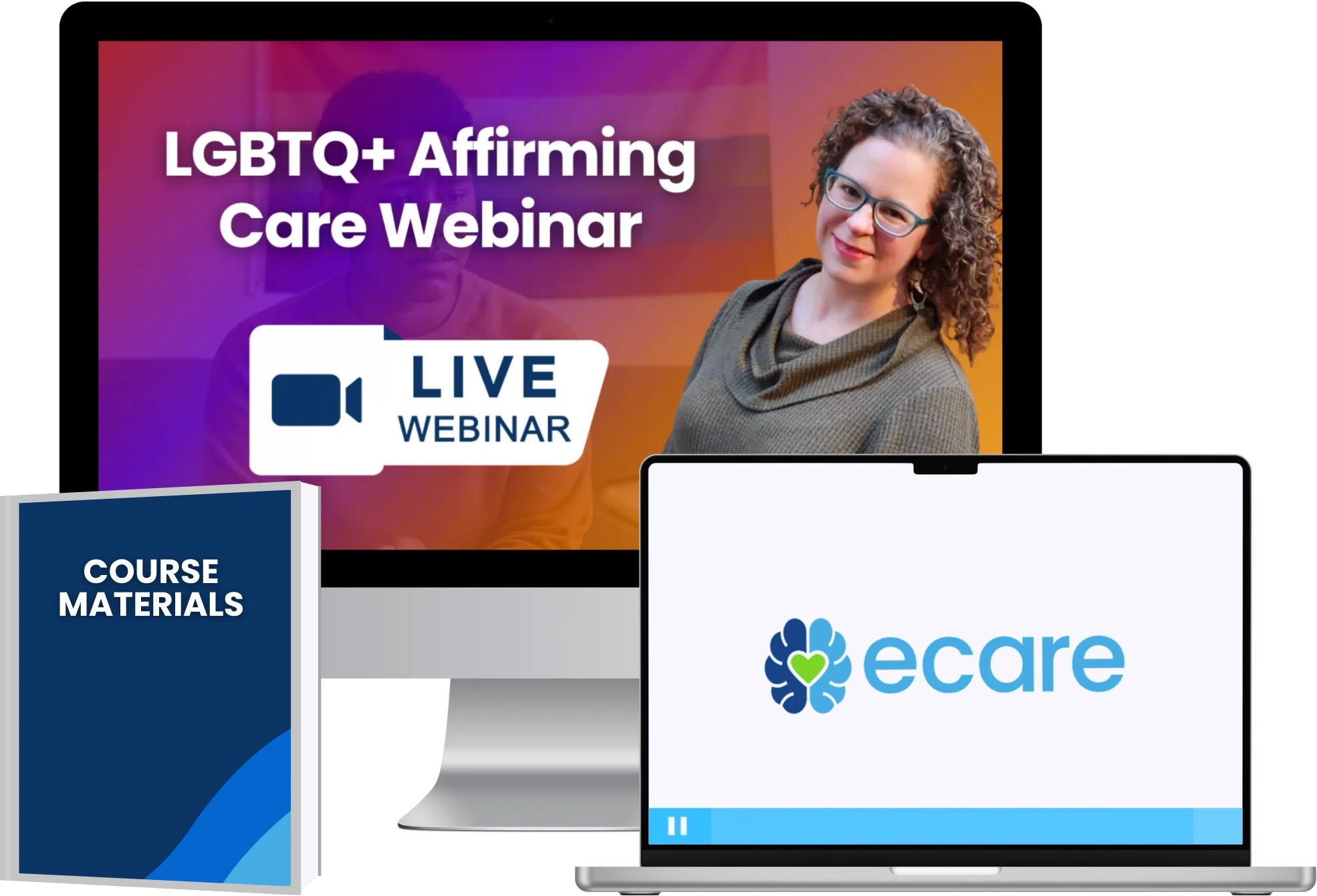
FREE 6-HOUR LIVE WEBINAR ON AFFIRMING, TRAUMA-INFORMED CARE FOR THERAPISTS WHO WORK WITH LESBIAN, GAY, BISEXUAL, TRANSGENDER, AND QUEER OR QUESTIONING (LGBTQ+) CLIENTS
FRIDAY, DECEMBER 11, 2026 @ 10:00 AM TO 5:30 PM ET
LGBTQ+ Clients Need More Than Care Built For Straight, Cisgender, Monogamous People: Here's An Affirming, Trauma-Informed Approach To Help Them Navigate Minority Stress, Family Rejection & Relational Trauma, From Intake To Intervention
In this free 6-hour Webinar, you'll discover how to adapt the therapeutic approach you already use to fit LGBTQ+ clients' lives: differentiate the forms of minority stress that can add to a client's depression or anxiety, trace how family rejection affects a client's attachment & relationships across the lifespan, assess for harm from a partner, & work with a client's partner & family through a gender transition, so a client can get help with what's happening at home, with family & at work
With Kaytee Gillis, LCSW, a psychotherapist whose practice centers on LGBTQ+ survivors of family and relationship trauma, who trains clinicians and agencies, including on harm from a partner in the LGBTQ+ community
After registration, you'll have the option to get the "Premium Pass," which gives you lifetime access to the recording to turn this training into a clinical reference you can use for the rest of your career, plus 6 continuing education (CE) credits.

Register Free Below. This Event Is For Licensed Mental Health Professionals
By providing your phone number, you consent to receive SMS messages about joining the webinar. You may reply STOP at any time to unsubscribe.

The Webinar Starts In
SCREEN FOR FIVE HIDDEN DEFICIENCIES
Omega-3, Vitamin D, B12, Magnesium & Iron in One Training
9 Board-Approved CEs
Available for Purchase in Next Step
RECORDING WITH CE PURCHASE
Watch on Your Own Schedule
What Therapists Say About eCare's Live Trainings
"I was very surprised and delighted by this presentation. My expectations were low, to be honest, but I was blown away by the knowledge, examples, and tangible tips (exercises, books, resources) provided in this training. Honestly, the BEST TRAINING I've attended in YEARS!!!!"
- eCare attendee

"This is the first webinar in FOREVER that kept me fully engaged for more than 20 minutes! Almost always I'm drifting toward other windows & presentations become a background podcast. Not this one..."
- eCare attendee
"Totally excellent presentation! I've been in practice for over 30 years, so seldom do seminars give me such clear, fresh, helpful information from an interesting and engaging presenter. This was great, and I'll look for other webinars given by this presenter. Thank you!!"
- eCare attendee
"Loved this training. It was well organized & easy to follow & understand. It felt like something I could apply in practice. Often in other presentations I think that was a great abstract concept, now how do I apply it, but that was not an issue here. I loved that there were many examples of techniques and how to implement them."
- eCare attendee
"I loved and appreciated the interactive format. It kept me engaged. Having the presenter keep pace with the comments, reflect on them, and being able to read other attendees' comments made this feel much more LIVE and in person. I really appreciated that much more than presentations that go on for a while and then answer questions out of context."- eCare attendee
"The presenters you choose seem to really know the material and they live it, they just don't pontificate, they believe in what they are sharing. This is what holds my attention. I get bored with a canned lecture, your instructors keep me focused and excited about putting to use what I've learned."- eCare attendee
eCare Behavioral Health Institute provides continuing education for licensed mental health professionals, including LCSWs, LPCs, LMFTs and psychologists.




When Youth Therapy Gets Stuck: Trauma, Anxiety, and Emotional Dysregulation in Children
What You'll Discover In The LGBTQ+ Affirming Care Webinar
Kaytee shows why an approach designed for straight, cisgender, monogamous clients can fall short with LGBTQ+ clients at every step (the intake form, the case conceptualization, the assessment of a relationship, the interventions you choose) & how to adapt each one, so the treatment plan can address the discrimination a client faces, their family history & their relationship with a partner
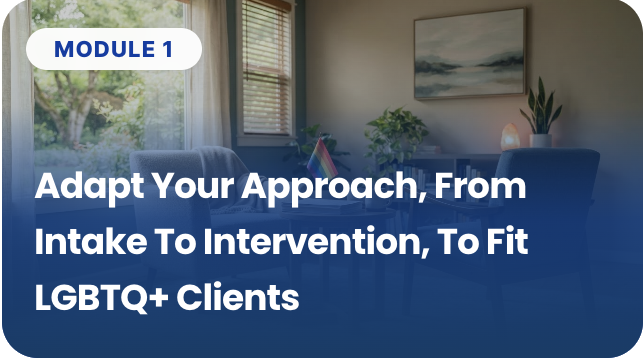
An approach that works for most of your caseload can still assume a client's pronouns, a partner of a different gender or a single partner, and an LGBTQ+ client may never mention when something didn't fit.
Kaytee walks through four ways to integrate LGBTQ+-affirming practice into the approach you already use: inclusive language, intersectional assessment strategies, trauma-informed interventions and the standards of affirming care.
You'll be able to adapt your intake form, your assessment and your interventions without giving up the model you trust, so an LGBTQ+ client can see their name, their pronouns and their partner on your intake form and hear them in your questions.
A client can come in for depression or anxiety while discrimination, stigma or internalized stigma keeps adding to it, and a plan built only for the presenting concern can leave that stress untouched, while a plan centered on identity can lose a client who came for something else.
Kaytee covers the forms of minority stress (discrimination, stigma, internalized stigma and intersecting identities) and how each may contribute to psychological, relational and traumatic stress, along with her position that a client's concern may or may not relate to their identity, and can be partly both.
You'll be able to include each form of minority stress in the case conceptualization beside the presenting concern, so your plan can address the stress a client faces at work, at home and in their community, along with the depression or anxiety they came in with.
A client can be years past coming out and still find it hard to trust a partner or stay close to a friend, and at intake that can look like ordinary relationship strain with no history attached.
Kaytee walks through how family rejection, abandonment and adverse coming-out experiences, along with the religious or social stigma around them, can shape attachment, identity development, relationship functioning and mental health across the lifespan.
You'll be able to connect the distance a client keeps from partners and friends to the family history it may come from, so they can begin to see why closeness has felt risky.
When a client transitions, a spouse may wonder what it means for the relationship, and a parent may keep using the client's old name.
Kaytee covers the relational and identity-based trauma particular to transgender and nonbinary clients, including transition-related stress, relationship changes, misgendering, and rejection or discrimination.
You'll be able to work with a client's transition-related stress and the partner's and family's response together, so the people closest to the client are part of the work while the relationship changes.
A client who was misgendered at a clinic, treated badly at work or turned away by a provider can arrive guarded, cancel early sessions or say little about who they are until they see how you respond.
Kaytee covers the effects of external, systemic and sociopolitical trauma, including discrimination in healthcare, employment, legal and other institutional systems, and the barriers to safety, support and help-seeking, from past experiences with providers to fear of discrimination and concerns about confidentiality.
You'll be able to put harm from institutions in the formulation beside harm from family and partners, so a client who has been let down by providers before can see you take it seriously, and have a reason to keep coming.

In Kaytee's view, a screen aimed mainly at a male aggressor and a heterosexual couple can make harm in a same-gender relationship look two-sided, and in any relationship, ordinary conflict can also be mistaken for harm.
Kaytee applies an affirming, trauma-informed framework to assessing harm from a partner and relational trauma, including a partner who uses the client's identity against them and the barriers to disclosure that can keep a client from telling you (assessment only: crisis and safety-planning protocols and couples treatment of harm from a partner are outside the training).
You'll be able to assess what a client tells you about a partner in a way that fits their relationship, so the plan you build can account for what's happening at home.
A client with low mood may mention a second partner, or a spouse who doesn't know about their sexual orientation, and if the intake form has room for one partner, the structure may never come up, or it may get treated as the cause of the low mood.
Kaytee covers diverse relationship structures, including consensual non-monogamy and mixed-orientation marriages, as part of an affirming, trauma-informed assessment, and how internalized stigma can show up between partners.
You'll be able to work with a client's relationship with its structure in view, asking questions that make an honest answer easier to give, so a client can get help with the low mood they came in with, in the relationship they actually have.
Step 1 / 2
Register For This Free 6-Hour Clinical Summit On June 2nd
Somatic Interventions Clinical Summit: Body-Based Healing for Trauma Clients When Talk Therapy Has Failed
The Webinar Starts In
When Youth Therapy Gets Stuck: Trauma, Anxiety, and Emotional Dysregulation in Children
What You'll Discover In The LGBTQ+ Affirming Care Webinar
Kaytee shows why an approach designed for straight, cisgender, monogamous clients can fall short with LGBTQ+ clients at every step (the intake form, the case conceptualization, the assessment of a relationship, the interventions you choose) & how to adapt each one, so the treatment plan can address the discrimination a client faces, their family history & their relationship with a partner
An approach that works for most of your caseload can still assume a client's pronouns, a partner of a different gender or a single partner, and an LGBTQ+ client may never mention when something didn't fit.
Kaytee walks through four ways to integrate LGBTQ+-affirming practice into the approach you already use: inclusive language, intersectional assessment strategies, trauma-informed interventions and the standards of affirming care.
You'll be able to adapt your intake form, your assessment and your interventions without giving up the model you trust, so an LGBTQ+ client can see their name, their pronouns and their partner on your intake form and hear them in your questions.
A client can come in for depression or anxiety while discrimination, stigma or internalized stigma keeps adding to it, and a plan built only for the presenting concern can leave that stress untouched, while a plan centered on identity can lose a client who came for something else.
Kaytee covers the forms of minority stress (discrimination, stigma, internalized stigma and intersecting identities) and how each may contribute to psychological, relational and traumatic stress, along with her position that a client's concern may or may not relate to their identity, and can be partly both.
You'll be able to include each form of minority stress in the case conceptualization beside the presenting concern, so your plan can address the stress a client faces at work, at home and in their community, along with the depression or anxiety they came in with.
A client can be years past coming out and still find it hard to trust a partner or stay close to a friend, and at intake that can look like ordinary relationship strain with no history attached.
Kaytee walks through how family rejection, abandonment and adverse coming-out experiences, along with the religious or social stigma around them, can shape attachment, identity development, relationship functioning and mental health across the lifespan.
You'll be able to connect the distance a client keeps from partners and friends to the family history it may come from, so they can begin to see why closeness has felt risky.
When a client transitions, a spouse may wonder what it means for the relationship, and a parent may keep using the client's old name.
Kaytee covers the relational and identity-based trauma particular to transgender and nonbinary clients, including transition-related stress, relationship changes, misgendering, and rejection or discrimination.
You'll be able to work with a client's transition-related stress and the partner's and family's response together, so the people closest to the client are part of the work while the relationship changes.
A client who was misgendered at a clinic, treated badly at work or turned away by a provider can arrive guarded, cancel early sessions or say little about who they are until they see how you respond.
Kaytee covers the effects of external, systemic and sociopolitical trauma, including discrimination in healthcare, employment, legal and other institutional systems, and the barriers to safety, support and help-seeking, from past experiences with providers to fear of discrimination and concerns about confidentiality.
You'll be able to put harm from institutions in the formulation beside harm from family and partners, so a client who has been let down by providers before can see you take it seriously, and have a reason to keep coming.
In Kaytee's view, a screen aimed mainly at a male aggressor and a heterosexual couple can make harm in a same-gender relationship look two-sided, and in any relationship, ordinary conflict can also be mistaken for harm.
Kaytee applies an affirming, trauma-informed framework to assessing harm from a partner and relational trauma, including a partner who uses the client's identity against them and the barriers to disclosure that can keep a client from telling you (assessment only: crisis and safety-planning protocols and couples treatment of harm from a partner are outside the training).
You'll be able to assess what a client tells you about a partner in a way that fits their relationship, so the plan you build can account for what's happening at home.
A client with low mood may mention a second partner, or a spouse who doesn't know about their sexual orientation, and if the intake form has room for one partner, the structure may never come up, or it may get treated as the cause of the low mood.
Kaytee covers diverse relationship structures, including consensual non-monogamy and mixed-orientation marriages, as part of an affirming, trauma-informed assessment, and how internalized stigma can show up between partners.
You'll be able to work with a client's relationship with its structure in view, asking questions that make an honest answer easier to give, so a client can get help with the low mood they came in with, in the relationship they actually have.
Step 1 / 2
Register For This Free 6-Hour Clinical Summit On June 2nd
Somatic Interventions Clinical Summit: Body-Based Healing for Trauma Clients When Talk Therapy Has Failed
The Webinar Starts In
Meet Your Presenter
Kaytee Gillis, LCSW, A Psychotherapist Whose Practice Centers On LGBTQ+ Survivors Of Family & Relationship Trauma
Kaytee Gillis, LCSW: Licensed Clinical Social Worker; psychotherapist in private practice; specializes in relationship and family trauma, especially in the LGBTQ+ community.
Kaytee Gillis, LCSW, is a psychotherapist in private practice whose work centers on survivors of family and relationship trauma, especially LGBTQ+ survivors. She is a Board Approved Clinical Supervisor in Louisiana and a doctoral student in social work at Michigan State University.
She is the author of several books on family and relationship trauma, including Breaking the Cycle and The Cycle Breaker's Guide to Healthy Relationships, and has been featured in national media. Kaytee trains clinicians and agencies, including on harm from a partner in the LGBTQ+ community.
Throughout the Webinar, she shows you how to adapt each part of the approach you already use, from your intake questions to your interventions, so you can help an LGBTQ+ client with the discrimination they face, a family that may have rejected them, and the harm or strain in their relationships.




The Webinar Starts In
The Difference After One Day
With The LGBTQ+ Affirming Care Webinar, You Can:
Adapt your intake, assessment & interventions to fit LGBTQ+ clients
See how discrimination & stigma may be adding to a client's depression or anxiety
Connect a client's distance from partners & friends to family rejection
Assess for harm from a partner with a framework that fits the relationship
Without It, You Could Face:
An intake that assumes a client's partner, & a client who may not correct it or return
Depression or anxiety treated while the stress from stigma keeps adding to it
A family history noted at intake & missing from the formulation
Harm from a partner that looks like a two-sided fight & goes unassessed
The Webinar Starts In
After you register, you'll see the option to get the Premium Pass: lifetime access to the recording, plus 6 CE credits.

Frequently Asked Questions
What exactly is this, and what do I get?
A free 6-hour live Webinar with Kaytee Gillis, LCSW, on Friday, December 11, 2026, from 10:00 AM to 5:30 PM ET (6 instructional hours, 1.5 hours of breaks included), on affirming, trauma-informed care for LGBTQ+ clients navigating relational and identity-based trauma. Registration is free, and after you register you can add the Premium Pass: lifetime access to the recording, plus 6 CE credits.
What do you mean, care built for straight, cisgender, monogamous people?
The standard tools can assume one kind of client. A relationship-status question with room for one partner, a gender field with two boxes, and, in Kaytee's view, partner-harm screening aimed mainly at a male aggressor and a heterosexual couple can each leave out who a client's partner is, what their gender is or how their relationship works. Kaytee shows how to adapt each step of your own approach, from intake to intervention.
It's a Friday in December. What if I can't clear the whole day?
You can still register. The Premium Pass gives you lifetime access to the recording, so you can watch on your own schedule or return to a part before a session where you need it, and the 6 CE credits come with it, live or from the recording.
I don't treat LGBTQ+ clients any differently. Is this for me?
Yes. You can treat every client with the same care and still have an intake form, a screen or a couples frame that assumes a straight, cisgender, monogamous client. Kaytee shows how to change those pieces without starting over.
Will I have to change the approach I use?
You'll keep it. Kaytee shows how to adapt it, adding affirming, trauma-informed practice to the model you already use: inclusive language, intersectional assessment, trauma-informed interventions and the standards of affirming care.
Is this couples therapy training?
No. The training centers on the LGBTQ+ client in front of you and their relationships: with family, with partners and with the systems around them. It covers assessing a client's relationship in any structure, and couples treatment of harm from a partner is outside its scope.
Is this another training on names and pronouns?
It goes well past names and pronouns. It's an introductory program, so no background in this area is needed, and its skill work is assessing for harm from a partner with a framework that fits the relationship's structure and adding affirming, trauma-informed practice to the approach you already use.
Isn't harm from a partner a job for specialists and advocates?
The assessment happens in your office. Kaytee shows how to assess for harm from a partner and account for the barriers that keep a client from telling you. Crisis and safety-planning protocols, couples treatment of harm from a partner, and work with the person causing harm are outside the training.
I've already taken an LGBTQ+ training. What's here for me?
It goes past the basics. This Webinar shows you how to recognize what a gender transition can change in a client's relationships and family, work with a relationship in consensual non-monogamy or a mixed-orientation marriage with the structure in view, and add affirming, trauma-informed practice to the approach you already use.
Does it cover gender-affirming medical care or letters?
No. The training covers the relational and identity-based trauma transgender and nonbinary clients can face, including transition-related stress and relationship changes. Medical transition and letters are outside its scope.
Is it really free?
Yes. Your seat at the live Webinar is free.
How do I get the 6 CE credits?
With the Premium Pass. You can earn the 6 CE credits live or from the recording. Full attendance is required for CE credit. CE credits for psychologists available through eCare Behavioral Health Institute, an APA-approved CE sponsor. The free seat doesn't include CE credits.
Is this approved for my license type and state?
To check approval for your license type & state, scroll to the bottom of this page & click the Board Approvals button.
The Webinar Starts In
Scope and Limitations Disclosure:
This Webinar is educational and is intended for licensed mental health professionals practicing within their scope of practice and jurisdiction. It teaches therapists to recognize and assess the relational and identity-based trauma LGBTQ+ clients can face, with minority stress in the case conceptualization, and to add affirming, trauma-informed practice to the approach they already use. The assessment fits the client's relationship, whatever its structure, and takes in what a gender transition can change for a client, a partner and a family. It does not train participants in gender-affirming medical care or letters, crisis or safety-planning protocols, couples treatment of harm from a partner, or work with the person causing harm, and it does not qualify participants to work outside their scope of practice. All clinical decisions remain the responsibility of the licensed clinician.
Commercial Support Disclosure
Kaytee Gillis, LCSW, is an independent clinician & continuing education presenter whose work focuses on relationship and family trauma, especially in the LGBTQ+ community. This training does not require participants to purchase any additional products, books, or materials to complete the training.
Conflict of Interest Disclosure
Kaytee Gillis, LCSW, reports no potential conflicts of interest and no commercial support for this program.