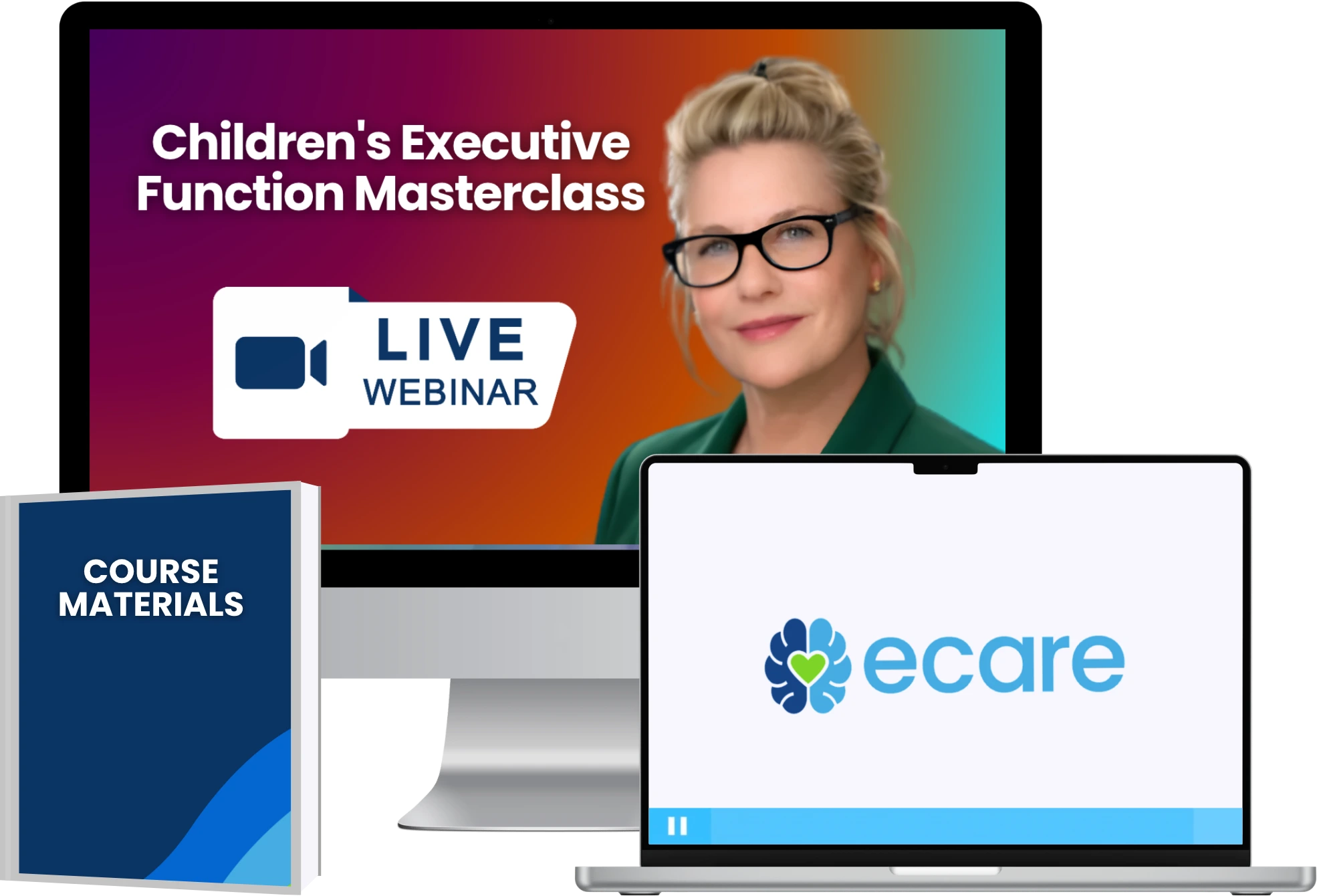
FREE 6-HOUR LIVE CHILDREN'S EXECUTIVE FUNCTION MASTERCLASS FOR THERAPISTS
THURSDAY, DECEMBER 10, 2026 @ 10:00 AM TO 5:30 PM ET
Revealed: A Pediatric Psychologist's Brain Science & Rhythmic Movement Method To Help Child Clients Finally Remember & Use Executive Function & Self-Regulation Skills At Home & School On Their Own
In this free 6-hour Masterclass, you'll discover how to teach attention, working memory, & impulse control with short lessons on how the brain works & rhythmic movement games, help a dysregulated child get back to calm & ready with co-regulation, & give parents & teachers a short daily routine in the same words & movements you use, so each child can practice at home & school, then start using these skills on their own
With Lynne Kenney, PsyD, a pediatric psychologist who works with children and families, the author or co-author of six books, and a nationally known presenter on executive function for clinicians and educators
After registration, you'll have the option to get the Premium Pass: lifetime access to the recording, so you can watch Dr. Kenney lead every movement sequence, song, and activity again before you lead them with a child, plus 6 CEs and 2 bonuses (The Executive Function In-Session Playbook and the transcript).

Register Free Below. This Event Is For Licensed Mental Health Professionals
By providing your phone number, you consent to receive SMS messages about joining the webinar. You may reply STOP at any time to unsubscribe.

The Masterclass Starts In
SCREEN FOR FIVE HIDDEN DEFICIENCIES
Omega-3, Vitamin D, B12, Magnesium & Iron in One Training
9 Board-Approved CEs
Available for Purchase in Next Step
RECORDING WITH CE PURCHASE
Watch on Your Own Schedule
What Therapists Say About eCare Trainings
"I was very surprised and delighted by this presentation. My expectations were low, to be honest, but I was blown away by the knowledge, examples, and tangible tips (exercises, books, resources) provided in this training. Honestly, the BEST TRAINING I've attended in YEARS!!!!"
- eCare attendee

"This is the first webinar in FOREVER that kept me fully engaged for more than 20 minutes! Almost always I'm drifting toward other windows & presentations become a background podcast. Not this one..."
- eCare attendee
"Totally excellent presentation! I've been in practice for over 30 years, so seldom do seminars give me such clear, fresh, helpful information from an interesting and engaging presenter. This was great, and I'll look for other webinars given by this presenter. Thank you!!"
- eCare attendee
"Loved this training. It was well organized & easy to follow & understand. It felt like something I could apply in practice. Often in other presentations I think that was a great abstract concept, now how do I apply it, but that was not an issue here. I loved that there were many examples of techniques and how to implement them."
- eCare attendee
"I loved and appreciated the interactive format. It kept me engaged. Having the presenter keep pace with the comments, reflect on them, and being able to read other attendees' comments made this feel much more LIVE and in person. I really appreciated that much more than presentations that go on for a while and then answer questions out of context."- eCare attendee
"The presenters you choose seem to really know the material and they live it, they just don't pontificate, they believe in what they are sharing. This is what holds my attention. I get bored with a canned lecture, your instructors keep me focused and excited about putting to use what I've learned."- eCare attendee
eCare Behavioral Health Institute provides continuing education for licensed mental health professionals, including LCSWs, LPCs, and LMFTs.




When Youth Therapy Gets Stuck: Trauma, Anxiety, and Emotional Dysregulation in Children
What You'll Discover In The Children's Executive Function Masterclass
Dr. Kenney shows how to co-regulate first, teach a child how their brain works & how to pick a strategy when they need one, use rhythmic movement to help each skill stick, & give parents & teachers the same techniques, so the child can gain confidence & competence using these skills on their own
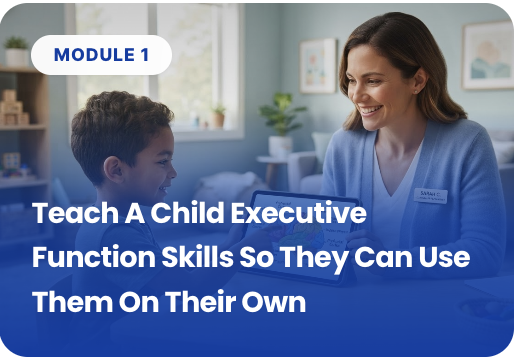
A child can say a strategy back in session, even explain when to use it, and still not reach for it when the work gets hard.
Dr. Kenney demonstrates her Brain Lessons, short child-friendly lessons on how the brain works, and the Cognitive Conversation, a structured talk with the child about what their brain and body are doing and which strategy to try, for each of the core skills she teaches: metacognition, attention, working memory, self-regulation, and response inhibition (the pause between an urge and an action).
You'll be able to use Brain Lessons and the Cognitive Conversation to teach each of those skills, so a child can start to notice what their brain and body are doing in the middle of a hard task, and pick a strategy.
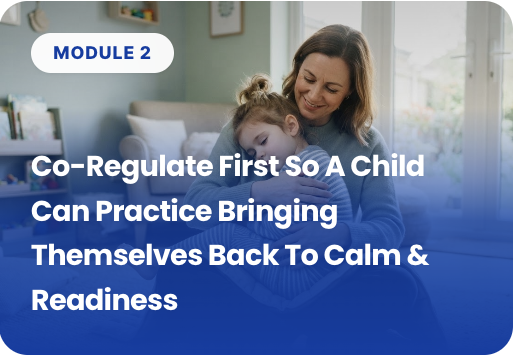
When a child goes from calm to upset in seconds, they may not be able to reach the strategy you've worked on together, and the session can end on the upset with no skill practiced.
Dr. Kenney shows the in-the-moment strategies she uses, co-regulation first: her co-regulation activities in 3/4 time, slowing down, calming movement, and My Energy Battery, a five-level scale a child uses to rate their own state, with her gas pedal for both ends (easing off for a child who is hyperaroused, pushing on for a child who is hypoaroused, slumped and slow to start).
You'll be able to co-regulate a dysregulated child back to calm and readiness, then use that calm to practice the strategy you've taught together, so the child can start bringing themselves back with less help from you.
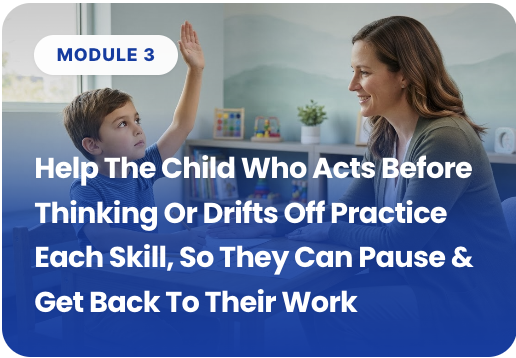
A child who acts before thinking, drifts off halfway through a task, or loses the second step of a direction can look like a child who isn't trying, and the child may keep being asked for effort before the skill itself has been practiced.
Dr. Kenney covers response inhibition as urge, pause, action, with self-coaching statements a child can say when the urge comes; her attention cycle (alert, focus, sustain, drift), a shared language for the child and the adults; and ways to engage working memory in more than one way, from visualization to forward and backward motor sequences.
You'll be able to give each skill its own practice in session, with the same words for the pause and for getting back to the task that you, the teacher, and the parent can all use, so the child can start to say those words to themselves.
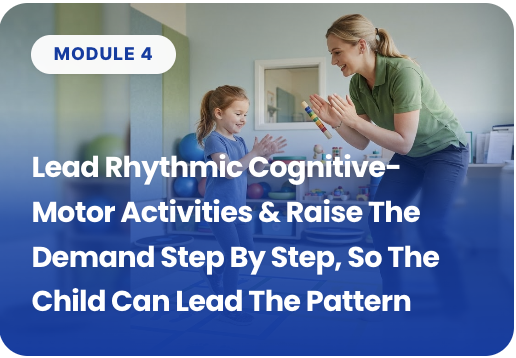
A child who needs to move before they can engage can spend much of a session getting settled, with little time left to practice attention or the pause.
Dr. Kenney leads her rhythmic cognitive-motor activities (movement on a beat paired with an attention, working memory, or response inhibition task), from the 4/4 start and the 16-beat phrase to choosing a tempo, along with her original executive function songs, and shows how she uses the research on movement, fitness, rhythm, and reading to decide which kind of movement to use, when in the day, and for which child.
You'll be able to run these activities yourself, raise the demand until the child can lead the pattern, and choose the movement and the time of day for each child, then give a parent or teacher who asks why movement an activity the child can do at home or between lessons, and the reason you picked it.
When reports arrive from several professionals and the same behavior keeps coming back, a treatment plan that targets only the behavior may leave out the earlier skills Dr. Kenney traces under executive function.
Dr. Kenney traces the developmental precursors she sees under executive function and self-regulation, from sensory-motor foundations through language, cognition, social-relational skills, behavior, and academics, and walks through a sample treatment plan and integrated assessment profile for a 9-year-old, from what each professional reported to first goals.
You'll be able to set first goals that account for those earlier skills alongside the behavior, and explain each one to the parents and teachers, so the adults at home and at school can practice the same first skills you're teaching in session.
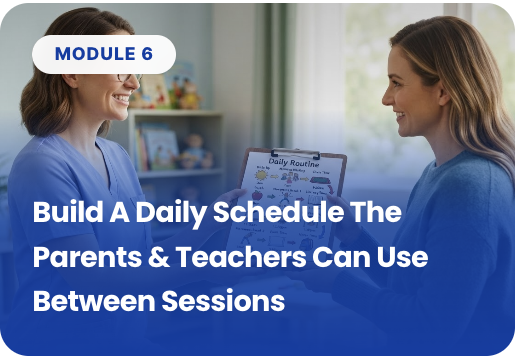
Parents and teachers often ask the child's therapist what to do, and a full school day or a busy family evening has little room for anything new, so the practice can stop when the session ends.
Dr. Kenney lays out her sample daily schedule, with short movement and self-coaching at points in the day that already happen (the morning, mid-morning, before lunch, an afternoon reset, and the end of the day), in activities of 2 to 3 or 5 to 7 minutes.
You'll be able to build that schedule for a child and hand it to the parents and teachers, with the child's own self-coaching words for each skill, so practice can happen in the morning, before homework, and between lessons, as well as with you.
Step 1 / 2
Register For This Free 6-Hour Clinical Summit On June 2nd
Somatic Interventions Clinical Summit: Body-Based Healing for Trauma Clients When Talk Therapy Has Failed
The Masterclass Goes Live In
When Youth Therapy Gets Stuck: Trauma, Anxiety, and Emotional Dysregulation in Children
What You'll Discover In The Children's Executive Function Masterclass
Dr. Kenney shows how to co-regulate first, teach a child how their brain works & how to pick a strategy when they need one, use rhythmic movement to help each skill stick, & give parents & teachers the same techniques, so the child can gain confidence & competence using these skills on their own
A child can say a strategy back in session, even explain when to use it, and still not reach for it when the work gets hard.
Dr. Kenney demonstrates her Brain Lessons, short child-friendly lessons on how the brain works, and the Cognitive Conversation, a structured talk with the child about what their brain and body are doing and which strategy to try, for each of the core skills she teaches: metacognition, attention, working memory, self-regulation, and response inhibition (the pause between an urge and an action).
You'll be able to use Brain Lessons and the Cognitive Conversation to teach each of those skills, so a child can start to notice what their brain and body are doing in the middle of a hard task, and pick a strategy.
When a child goes from calm to upset in seconds, they may not be able to reach the strategy you've worked on together, and the session can end on the upset with no skill practiced.
Dr. Kenney shows the in-the-moment strategies she uses, co-regulation first: her co-regulation activities in 3/4 time, slowing down, calming movement, and My Energy Battery, a five-level scale a child uses to rate their own state, with her gas pedal for both ends (easing off for a child who is hyperaroused, pushing on for a child who is hypoaroused, slumped and slow to start).
You'll be able to co-regulate a dysregulated child back to calm and readiness, then use that calm to practice the strategy you've taught together, so the child can start bringing themselves back with less help from you.
A child who acts before thinking, drifts off halfway through a task, or loses the second step of a direction can look like a child who isn't trying, and the child may keep being asked for effort before the skill itself has been practiced.
Dr. Kenney covers response inhibition as urge, pause, action, with self-coaching statements a child can say when the urge comes; her attention cycle (alert, focus, sustain, drift), a shared language for the child and the adults; and ways to engage working memory in more than one way, from visualization to forward and backward motor sequences.
You'll be able to give each skill its own practice in session, with the same words for the pause and for getting back to the task that you, the teacher, and the parent can all use, so the child can start to say those words to themselves.
A child who needs to move before they can engage can spend much of a session getting settled, with little time left to practice attention or the pause.
Dr. Kenney leads her rhythmic cognitive-motor activities (movement on a beat paired with an attention, working memory, or response inhibition task), from the 4/4 start and the 16-beat phrase to choosing a tempo, along with her original executive function songs, and shows how she uses the research on movement, fitness, rhythm, and reading to decide which kind of movement to use, when in the day, and for which child.
You'll be able to run these activities yourself, raise the demand until the child can lead the pattern, and choose the movement and the time of day for each child, then give a parent or teacher who asks why movement an activity the child can do at home or between lessons, and the reason you picked it.
When reports arrive from several professionals and the same behavior keeps coming back, a treatment plan that targets only the behavior may leave out the earlier skills Dr. Kenney traces under executive function.
Dr. Kenney traces the developmental precursors she sees under executive function and self-regulation, from sensory-motor foundations through language, cognition, social-relational skills, behavior, and academics, and walks through a sample treatment plan and integrated assessment profile for a 9-year-old, from what each professional reported to first goals.
You'll be able to set first goals that account for those earlier skills alongside the behavior, and explain each one to the parents and teachers, so the adults at home and at school can practice the same first skills you're teaching in session.
Parents and teachers often ask the child's therapist what to do, and a full school day or a busy family evening has little room for anything new, so the practice can stop when the session ends.
Dr. Kenney lays out her sample daily schedule, with short movement and self-coaching at points in the day that already happen (the morning, mid-morning, before lunch, an afternoon reset, and the end of the day), in activities of 2 to 3 or 5 to 7 minutes.
You'll be able to build that schedule for a child and hand it to the parents and teachers, with the child's own self-coaching words for each skill, so practice can happen in the morning, before homework, and between lessons, as well as with you.
Step 1 / 2
Register For This Free 6-Hour Clinical Summit On June 2nd
Somatic Interventions Clinical Summit: Body-Based Healing for Trauma Clients When Talk Therapy Has Failed
The Masterclass Starts In
Meet Your Presenter
Lynne Kenney, PsyD, A Pediatric Psychologist Who Works With Children & Families
Dr. Kenney earned her PsyD at Pepperdine University, after a bachelor's in psychology and a master's in physical education at the University of Southern California, and has advanced fellowship training in forensic psychology and developmental pediatric psychology from Massachusetts General Hospital/Harvard Medical School and Harbor-UCLA/UCLA Medical School.
She's the author or co-author of six books, including Bloom: 50 Things to Say, Think, and Do with Anxious, Angry, and Over-the-Top Kids, Musical Thinking, and Move More, Learn More, a 2026 book on movement and the brain in early childhood that she co-edited.
She presents nationally and internationally on executive function to clinicians and educators.
Throughout the Masterclass, she teaches her Brain Lessons and the Cognitive Conversation, leads the rhythmic movement and calming activities herself, shows how she uses co-regulation and a five-level energy scale when a child is dysregulated, and walks through a sample treatment plan and a daily routine for parents and teachers.
So the next time a child can say a strategy in session and still not use it at home or school, you'll know how to teach the skill in words they understand, practice it with them in movement, and give the parents and teachers a routine that keeps it going, so the child can start to remember and use it on their own.




The Masterclass Starts In
The Difference After One Day
With The Children's Executive Function Masterclass, You Can:
Teach executive function skills in a child's words & practice them in movement
Use the calm after co-regulation to practice the steps a child can take themselves
Give response inhibition, attention, & working memory their own practice
Hand parents & teachers a daily schedule with the child's own self-coaching words
Without It, You Could Face:
A strategy a child can repeat in session & still not use when the work gets hard
Co-regulating a child back to calm & readiness with no plan for the child to take over
A child seen as not listening, with no plan to practice the skill underneath
Parents & teachers asking what to do, with nothing in the child's words to hand them
The Masterclass Starts In
After you register, you'll see the option to get the Premium Pass: lifetime access to the recording, plus 6 CEs and 2 bonuses (The Executive Function In-Session Playbook and the transcript).
Frequently Asked Questions
What exactly is this, and what do I get?
A free 6-hour live Masterclass with Lynne Kenney, PsyD, on Thursday, December 10, 2026, from 10:00 AM to 5:30 PM ET (6 instructional hours, breaks included), on Dr. Kenney's brain science and rhythmic movement method for helping children remember and use executive function and self-regulation skills at home and school on their own. Registration is free, and after you register you can add the Premium Pass: lifetime access to the recording, plus 6 CEs and 2 bonuses (The Executive Function In-Session Playbook and the transcript).
Why can a child know a strategy and still not use it when they're upset?
In Dr. Kenney's view, co-regulation comes first and self-regulation grows from it, so a strategy a child can say in a calm moment may not be in reach yet when they're upset. Self-regulation can be taught, much like reading, and it takes repeated practice with frequent feedback. Dr. Kenney pairs direct teaching with movement and a daily schedule the parents and teachers can use.
It's a Thursday and I see clients all day. Can I watch it later?
Yes, with the Premium Pass. It includes lifetime access to the recording and the transcript, so you can watch the whole day, or go back to the movement sequences and songs before you lead them with a child.
Is this about a specific condition?
No. The Masterclass is about executive function and self-regulation in children generally, and it doesn't name or treat any condition. If something else may be driving what you see, the skill work Dr. Kenney teaches can run alongside an evaluation.
I already co-regulate and use calming strategies with children. What does this add?
The next step after calm. Dr. Kenney pairs her in-the-moment strategies with Brain Lessons, rhythmic practice, and a daily schedule, so once a child is back to calm, they practice a skill they can start to use on their own.
My client's school already adds movement to the day. What's different here?
The thinking task inside the movement. Dr. Kenney's rhythmic cognitive-motor activities put an attention, working memory, or response inhibition task on a beat and get harder step by step. Her position is that movement with a thinking load does more for executive function than movement alone, and she walks through the research she draws on.
Isn't movement work an occupational therapist's job?
Not this kind. The movement Dr. Kenney teaches is a thinking task on a beat, or calming movement you use to co-regulate, and you lead both in session. It doesn't replace an occupational therapist's sensory-motor treatment, a psychological evaluation, reading instruction, or decisions that belong to the child's pediatrician or psychiatrist.
Will this help with reading or grades?
The Masterclass makes no promise about reading or grades. Dr. Kenney connects research on movement, fitness, rhythm, and reading to classroom and clinical decisions, and the links she draws are her position on that research.
Is this about calming a child down in a crisis?
No. The in-the-moment strategies are for a child who goes from calm to upset in seconds during a task, and they aren't a crisis or safety protocol. Co-regulation comes first in Dr. Kenney's approach, and the goal is a child who can use the skills on their own.
I've taken a training with Dr. Kenney before. Is this the same?
There's overlap, and this one is built for therapists. It covers co-regulation first, the core skills taught in a child's words, rhythmic practice, and a daily schedule for the parents and teachers, across 6 hours for licensed mental health professionals who work with children.
Will this conflict with the approach I already use?
No. It's built to add to it. Dr. Kenney's activities run 2 to 3 or 5 to 7 minutes, so you can add one inside a session you already run, whatever approach you use.
How do I get the 6 CEs?
With the Premium Pass. You can earn the 6 CEs live or from the recording. The free seat doesn't include CEs.
Is this approved for my license type and state?
To check approval for your license type & state, scroll to the bottom of this page & click the Board Approvals button.
The Masterclass Starts In
Scope and Limitations Disclosure:
This Masterclass is educational and is intended for licensed mental health professionals practicing within their scope of practice and jurisdiction. It supports teaching and practicing executive function and self-regulation skills with children, in session and through the parents and teachers around the child, and co-regulating a dysregulated child back to calm and readiness. It does not train participants in psychological or neuropsychological testing, occupational therapy or sensory-motor treatment, reading instruction, or crisis response, and it does not qualify participants to work outside their scope of practice. All clinical decisions remain the responsibility of the licensed clinician.
Commercial Support Disclosure
Lynne Kenney, PsyD, is an independent pediatric psychologist & continuing education presenter whose work focuses on executive function, self-regulation, & movement in children's learning. This Masterclass does not require participants to purchase any additional products, books, or materials to complete the training.