
FREE 6-HOUR LIVE COUPLES COUNSELING MASTERCLASS FOR LICENSED THERAPISTS
THURSDAY, NOVEMBER 5, 2026 | 11:00 AM TO 6:30 PM ET
The 3 Hidden Blocks That Keep Couples Therapy Stuck For Months, & The Process-Focused Strategies That Help Partners Finally Resolve Their Problems
In this free 6-hour Masterclass, Dr. Klein shows you how to change the narratives that keep couples stuck so they can start working through issues like money, kids & intimacy, turn blame into empathy so they stop defending & start solving problems together, & help them release the old resentments that reignite their arguments to rebuild the trust & closeness that repairs their relationship
With Marty Klein, PhD, LMFT, a California-licensed marriage and family therapist in Palo Alto who trains clinicians on couples intakes, narratives, and reframing
6 CEs and lifetime recording access available for purchase after free registration.
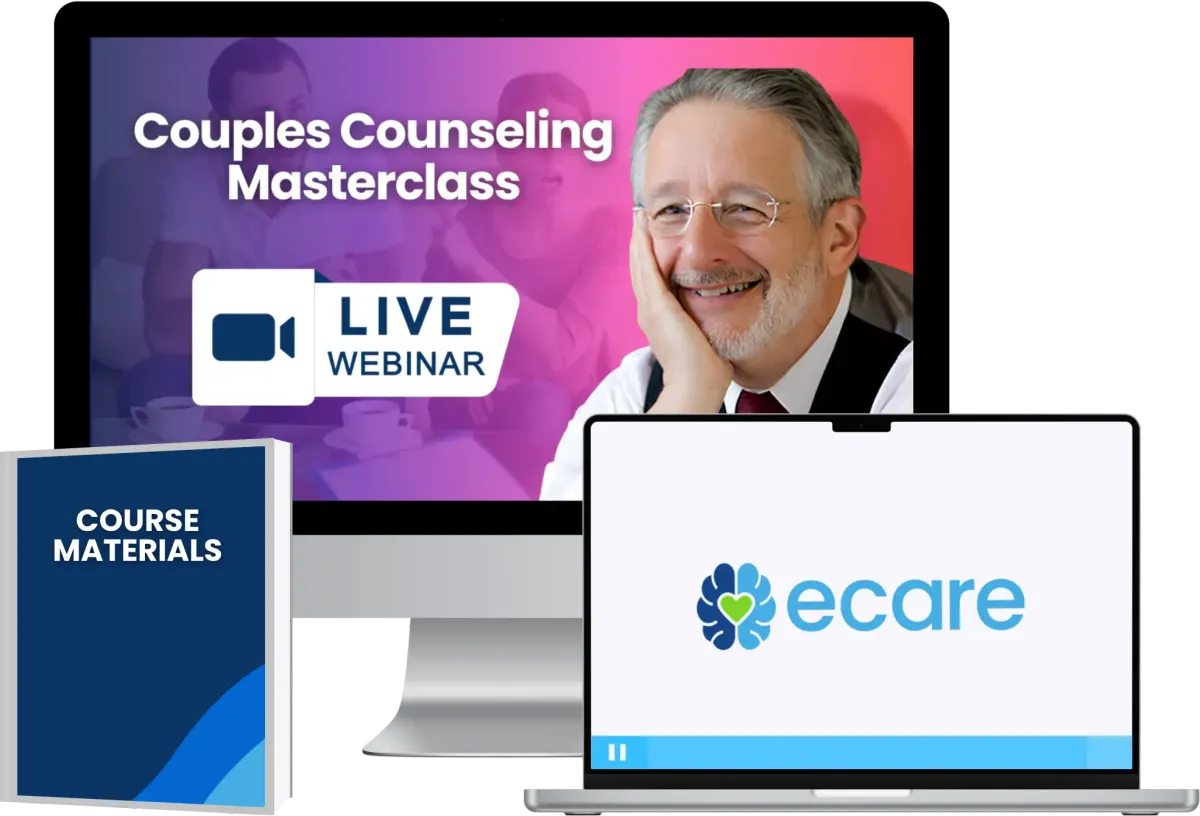

Register Free Below. This Event Is For Licensed Mental Health Professionals
By providing your phone number, you consent to receive SMS messages about joining the webinar. You may reply STOP at any time to unsubscribe.

The Masterclass Goes Live In
SCREEN FOR FIVE HIDDEN DEFICIENCIES
Omega-3, Vitamin D, B12, Magnesium & Iron in One Training
9 Board-Approved CEs
Available for Purchase in Next Step
RECORDING WITH CE PURCHASE
Watch on Your Own Schedule




When Youth Therapy Gets Stuck: Trauma, Anxiety, and Emotional Dysregulation in Children
What You'll Discover In The Couples Counseling Masterclass
Six process-focused strategies aimed at the blocks that keep your couples stuck for months, so every session moves partners closer to resolving the problems in their relationship
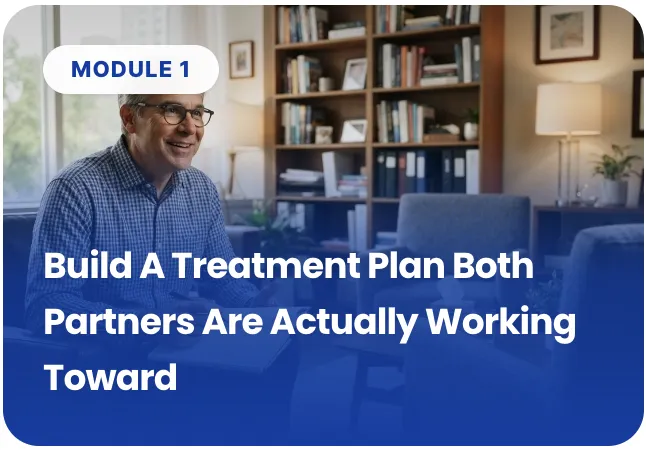
Build A Treatment Plan Both Partners Are Actually Working Toward
One partner wants to save the relationship, the other is quietly deciding whether to stay, and a treatment plan built around one of them stalls for both.
Dr. Klein walks through the features of a good intake, including how to bring out what each partner actually wants from therapy before the work begins.
You'll be able to build a treatment plan around goals both partners share, so the therapy works for both of them and moves them toward repairing their relationship.
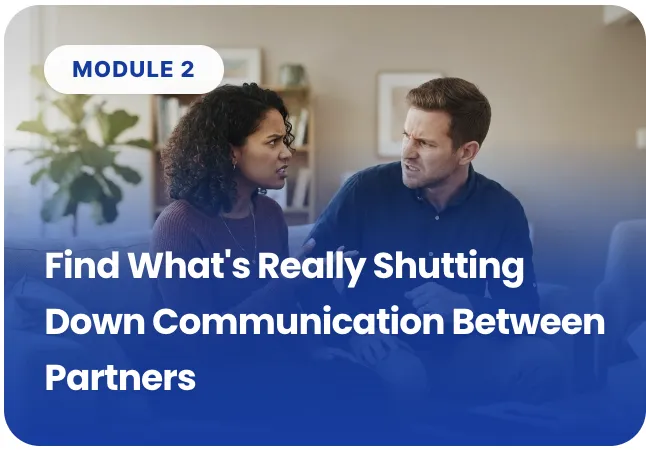
Find What's Really Shutting Down Communication Between Partners
A couple calls it a "communication problem," and the usual skills practice hasn't changed how they talk to each other at home.
Dr. Klein covers what helps and what interferes with good communication, including why, in his view, some partners understand each other perfectly well and simply don't like what they hear.
You'll be able to pinpoint what's really getting in the way between them, so the couple stops talking past each other and starts dealing with the real issue.

Keep Both Partners Present When The Conversation Gets Hard
When anxiety rises, both partners stop listening and start defending, and the conversation they came in to have never gets finished.
Dr. Klein covers ways of training couples to be present, especially when they're anxious, and how to slow a conversation down without taking it over.
You'll be able to help both partners stay present enough to hear each other out, so they can finish the hard conversation about money, kids or intimacy instead of shutting it down.

Help Couples Let Go Of Old Resentments That Fuel Their Arguments
They're arguing about this week, but the anger in the room is years older, and every new disagreement reopens it.
Dr. Klein covers how prior disappointments and resentments undermine a couple's attempts at collaborative conflict, and how to bring that older hurt into the work instead of letting it run the session.
You'll be able to address the resentment underneath the argument, so partners can stop relitigating the past and start solving the problem in front of them.

Turn Blame Into Empathy With Reframes Both Partners Hear As Fair
Each partner arrives sure the other one is the problem, and whatever you say, one of them hears you taking a side.
Dr. Klein demonstrates reframing to encourage empathy, with brief role-plays, and shows how to move a session off what they argue about and onto how they treat each other while they argue.
You'll be able to reframe each partner's behavior in a way the other can understand, so they stop building a case against each other and start working on the problem as a team.

Help A Couple Change The Story That Keeps Them From Moving Forward
A couple walks in with a label for what's wrong: "trust issues," "anger problems," "communication problems."
Dr. Klein shows how to identify the narratives that keep a couple trapped in their patterns, help them change those narratives, and work with the couple who asks for change and then resists it.
You'll be able to help a couple see their problem in a way they can actually solve, so they push past the resistance and start resolving the problems in their relationship.
Step 1 / 2
Register For This Free 6-Hour Clinical Summit On June 2nd
Somatic Interventions Clinical Summit: Body-Based Healing for Trauma Clients When Talk Therapy Has Failed
The Masterclass Goes Live In
When Youth Therapy Gets Stuck: Trauma, Anxiety, and Emotional Dysregulation in Children
What You'll Discover In The Couples Counseling Masterclass
Six process-focused strategies aimed at the blocks that keep your couples stuck for months, so every session moves partners closer to resolving the problems in their relationship
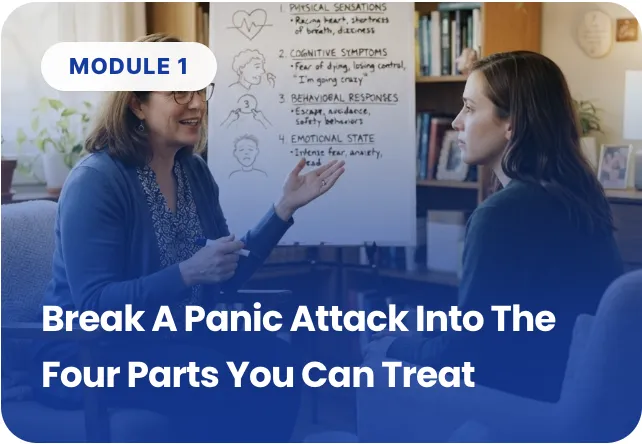
Break A Panic Attack Into The Four Parts You Can Treat
See how to separate any panic attack into its four components: the thought, the physical arousal, the emotion, and what the client does in response. Then map those onto the antecedent, behavior, consequence cycle so you can see which response is keeping the attacks coming, and cover anxiety sensitivity and the role of the amygdala in language you can use with a client.

Separate A Panic Attack From Panic Disorder & Agoraphobia
Know how to identify the presentation you’re witnessing. A panic attack is four or more sensations that peak fast, and it can appear in any anxiety presentation. Panic disorder is different: at least one attack that came out of nowhere, followed by fear of the next one and the avoidance that follows. Agoraphobia can show up with panic disorder or without it, and the two often travel together.
Conduct An Interoceptive Assessment & Run The Exposure
Watch Ashley Smith conduct an interoceptive assessment live, then learn to run the exposures in session: how to choose the exercise for the sensation the client fears most, how long to stay with it, what to say while the client is having the sensation, and how to set up the practice they do between sessions. You will get her decision rules for when a client repeats an exposure and when they move to a harder one, the self-report measures for tracking progress week to week, why safety signals have to come out before in vivo work, and how imaginal exposure brings the client's thoughts into it.
Know When Breath Retraining Helps Panic & When It Does Not
Discover which automatic thoughts and core beliefs drive panic, how to build self-talk a client can actually use during an attack, and where self-compassion fits. Then learn what mindfulness is and is not in panic treatment, and when breath retraining is useful versus when it is contraindicated.
Handle The Medical Side Of A Panic Case Without Overstepping
Understand why a full medical workup belongs early in a panic case and what it rules in as well as out, what your role is on the parts of the plan you do not control, and how to talk with a client and with the other providers on their case. You will leave with language that stays inside your scope and keeps the rest of a client's care lined up with the exposure work instead of pulling against it.
Know Exactly What To Do When A Client Panics In Session
Be able to move a stalled panic case forward using four specific methods. When the client stops doing the exposures between sessions, how to bring in their values and use rewards and consequences to get adherence back. When a client will not give up a safety signal, what to do about it. When the family accommodates every avoidance, what to say to them. And when a panic attack starts in your office, what to do for the rest of the session. You will also learn how to sequence interventions when panic shows up alongside another presentation, and how to close treatment on the right goal.
Step 1 / 2
Register For This Free 6-Hour Clinical Summit On June 2nd
Somatic Interventions Clinical Summit: Body-Based Healing for Trauma Clients When Talk Therapy Has Failed
One partner wants to save the relationship, the other is quietly deciding whether to stay, and a treatment plan built around one of them stalls for both.
Dr. Klein walks through the features of a good intake, including how to bring out what each partner actually wants from therapy before the work begins.
You'll be able to build a treatment plan around goals both partners share, so the therapy works for both of them and moves them toward repairing their relationship.
A couple calls it a "communication problem," and the usual skills practice hasn't changed how they talk to each other at home.
Dr. Klein covers what helps and what interferes with good communication, including why, in his view, some partners understand each other perfectly well and simply don't like what they hear.
You'll be able to pinpoint what's really getting in the way between them, so the couple stops talking past each other and starts dealing with the real issue.
When anxiety rises, both partners stop listening and start defending, and the conversation they came in to have never gets finished.
Dr. Klein covers ways of training couples to be present, especially when they're anxious, and how to slow a conversation down without taking it over.
You'll be able to help both partners stay present enough to hear each other out, so they can finish the hard conversation about money, kids or intimacy instead of shutting it down.
They're arguing about this week, but the anger in the room is years older, and every new disagreement reopens it.
Dr. Klein covers how prior disappointments and resentments undermine a couple's attempts at collaborative conflict, and how to bring that older hurt into the work instead of letting it run the session.
You'll be able to address the resentment underneath the argument, so partners can stop relitigating the past and start solving the problem in front of them.
Each partner arrives sure the other one is the problem, and whatever you say, one of them hears you taking a side.
Dr. Klein demonstrates reframing to encourage empathy, with brief role-plays, and shows how to move a session off what they argue about and onto how they treat each other while they argue.
You'll be able to reframe each partner's behavior in a way the other can understand, so they stop building a case against each other and start working on the problem as a team.
A couple walks in with a label for what's wrong: "trust issues," "anger problems," "communication problems."
Dr. Klein shows how to identify the narratives that keep a couple trapped in their patterns, help them change those narratives, and work with the couple who asks for change and then resists it.
You'll be able to help a couple see their problem in a way they can actually solve, so they push past the resistance and start resolving the problems in their relationship.
The Masterclass Goes Live In
Meet Your Presenter
Marty Klein, PhD, LMFT, Has Spent His Career In The Room With Couples & Teaching Clinicians What That Work Demands
Dr. Klein is a California-licensed marriage and family therapist in private practice in Palo Alto. Much of his clinical work is with couples and individuals bringing problems with kids, in-laws, money and what clients call "communication problems." He is the author of seven books.
Dr. Klein has taught couples trainings to clinicians on intakes, narratives and reframing, and he supervises other therapists' cases in an ongoing consultation group.
Throughout the Masterclass, he'll walk through real couples' cases, demonstrate interventions in brief role-plays and make time to review your own cases. He's also known for teaching with a good deal of humor, so be ready to learn and laugh at the same time.

The Practice You Can Build After One Day
WITH THIS MASTERCLASS:
A treatment plan both partners are committed to
Partners hearing each other out & solving problems together
Couples settling new issues instead of reigniting old arguments
Couples rebuilding the trust & closeness they lost
WITHOUT THIS MASTERCLASS:
A treatment plan only one partner is working toward
Partners defending themselves instead of solving anything
Old resentments that reignite with every new argument
Trust & closeness that keep slipping further away
The live Masterclass is free when you register. 6 CEs and lifetime recording access are available as an upgrade after you sign up.
Questions Therapists Ask Before Registering
What exactly is this, and what do I get?
A free 6-hour live Masterclass with Dr. Marty Klein on process-focused strategies for stuck couples, from intake to reframing to the story a couple brings in. 6 CEs and lifetime recording access are available as an upgrade after you register.
I see clients on Thursdays. Is it still worth registering?
Yes. The Masterclass runs Thursday, November 5, from 11:00 AM to 6:30 PM ET, so you can join for the hours you're free, and Q&A runs throughout.
Is this really free?
Yes. Registration and the full live Masterclass are free.
Is this live, or a recording?
Live. Dr. Klein teaches in real time, with Q&A and discussion of participants' own cases.
I took Dr. Klein's June couples training. Is this the same thing?
No. The June training focused on high-conflict couples. This Masterclass focuses on couples who stay stuck, starting with intake and the story each partner brings in.
Is this mostly about intimacy issues?
No. Intimacy is one of the topics couples get stuck on, alongside money and kids. The Masterclass covers intake, communication, presence, old resentments, reframing and narratives.
Will this be too theoretical to use in session?
No. Dr. Klein works from real couples' cases and brief role-plays, with time to discuss the couples you're working with.
Is this too basic for me?
It's taught at the intermediate level, for clinicians who already see couples and want more options with the ones who stay stuck.
Is this for my license type?
Yes, if you're a licensed mental health professional who sees couples: LMFTs, LPCs, LCSWs, psychologists and other licensed clinicians.
I already use a couples model. Will this conflict with it?
No. These strategies work alongside the model you use, for the moments when that model has stalled with a particular couple.
How many CEs are available, and how do I get them?
6 CEs are available as an upgrade after you register. Complete a short quiz and evaluation, and your certificate is available right away.
Can I get the recording?
Yes. Lifetime recording access is available as an upgrade after you register.
Are the CEs approved for my license?
To check approval for your license type & state, scroll to the bottom of this page & click the Board Approvals button.
Scope and Limitations Disclosure:
This Masterclass is educational and is intended for licensed mental health professionals practicing within their scope of practice and jurisdiction. It supports assessment, treatment planning, and intervention with couples in therapy. It does not train participants in risk or safety assessment, crisis intervention, or medication management, and it does not qualify participants to work outside their scope of practice. All clinical decisions remain the responsibility of the licensed clinician.
Commercial Support Disclosure
Marty Klein, PhD, LMFT is an independent clinician, author & continuing education presenter whose work focuses on couples therapy, relationships, and clinical training for therapists. This training does not require participants to purchase any additional products, books, or materials to complete the training.